Your property retains 95.82% of its revenue from a direct booking, yet many luxury hotels still surrender a quarter of their potential earnings to third-party commissions. It's a high price to pay for a guest experience you can't control. The solution isn't just a prettier homepage. It's a strategic commitment to superior ux design for hotel booking websites. When your digital interface feels clunky compared to global giants, your stunning photography and premium brand identity get buried under technical friction.
We recognize the frustration of watching high abandonment rates at the checkout stage. You've invested in visual excellence, and your website should reflect that elite status. This guide shows you how to reclaim your direct revenue and elevate your digital guest experience for 2026. We'll explore mobile-first strategies, WCAG 2.2 accessibility standards, and the art of frictionless navigation to transform your website into your most profitable asset.
Key Takeaways
- Reclaim your revenue by eliminating the hidden friction that drives guests toward third-party platforms.
- Master the core principles of ux design for hotel booking websites to guide guests seamlessly from first discovery to final confirmation.
- Harness the power of high-resolution visual storytelling to convey your property’s premium positioning instantly.
- Perform a targeted five-step audit to optimize your booking engine’s speed and mobile checkout efficiency.
- Discover how integrating professional photography with expert web design creates a digital experience that mirrors a luxury concierge service.
The High Stakes of Hotel UX: Direct Bookings vs. OTAs
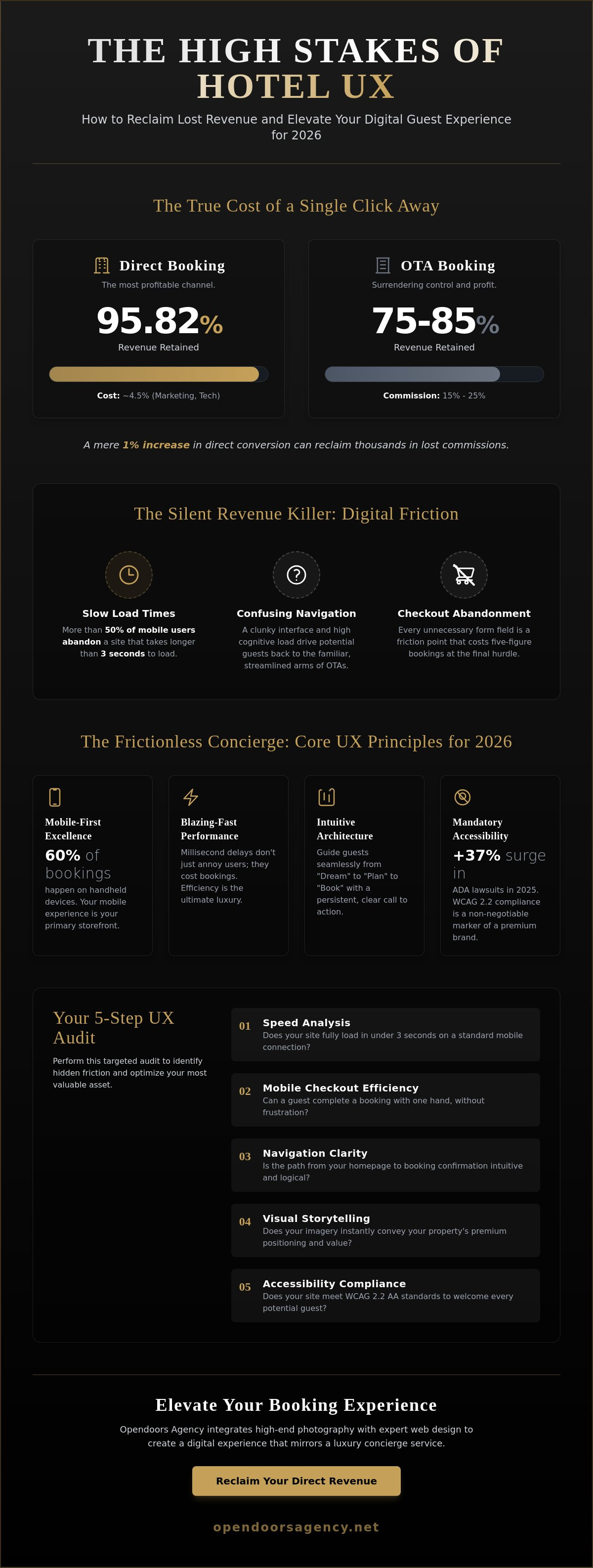
Every friction point on your website is a silent invitation for guests to book elsewhere. When a user encounters a clunky interface or confusing navigation, they don't just get frustrated; they retreat to the familiar, streamlined arms of Online Travel Agencies (OTAs). This shift costs you. While OTAs like Booking.com and Expedia charge commissions between 15% and 25%, the all-in cost of a direct booking is approximately 4.5%. Superior ux design for hotel booking websites is the only way to close this gap and protect your margins.
We view digital design as a "Frictionless Concierge." Just as your front-desk staff anticipates a guest's needs, your website must anticipate their digital path. It should feel intuitive, elite, and effortless. In the 2026 landscape, this experience must be perfected for mobile first. With mobile devices now accounting for 60% of all hotel reservations, your handheld experience is no longer a secondary concern; it is your primary storefront. A website that fails on mobile is a website that fails to convert.
The Psychology of the Modern Traveler
Travelers today start their journey with high expectations and short attention spans. The "Search to Stay" journey is fragile. If the cognitive load is too high, users drop off instantly. Luxury guests expect clarity. They want to see transparent pricing and immediate availability without hunting through hidden menus. By applying core UX principles, you build a foundation of trust. A website that works perfectly suggests a stay that will be equally flawless. Aesthetics matter, but usability secures the reservation.
UX as a Revenue Driver
Design is a financial strategy. Hotels keep 95.82% of the revenue from a direct booking compared to just 82.06% from an OTA. A mere 1% increase in direct conversion can reclaim thousands in lost commissions. Speed is your most critical ally here. Verified data shows that more than half of mobile users abandon a site that takes longer than 3 seconds to load. Millisecond delays don't just annoy users; they cost five-figure bookings. Investing in high-performance ux design for hotel booking websites ensures you capture that value instead of surrendering it to a third party. Efficiency is the ultimate luxury.
Core UX Principles for High-Converting Hotel Websites
High-performance design transcends simple aesthetics. It creates a logical flow that guides a guest from the initial spark of discovery to the final confirmation. Effective ux design for hotel booking websites uses visual hierarchy to prioritize information. Large, immersive imagery captures the 'dream' phase. Clear, concise typography handles the 'book' phase. This isn't about cluttering the screen with buttons; it's about leading the eye with intent. Every pixel should serve a purpose in the conversion funnel.
The old 'Three-Click Rule' has evolved. In 2026, the number of clicks matters less than the clarity of the journey. If a guest feels progress with every tap, they stay. If they feel lost, they leave. We focus on reducing cognitive load. Every interaction should feel like a natural progression, not a technical hurdle. Micro-interactions play a vital role here. Subtle animations or color shifts confirm actions, providing a sense of tactile response that delights the user. These small moments of feedback build confidence in the booking process.
Inclusivity is a mandate, not an option. Federal ADA website lawsuits surged by 37% in 2025, with over 5,100 cases filed. Aligning with WCAG 2.2 AA standards protects your brand and expands your reach. Accessible design ensures that every potential guest, regardless of ability, can experience your property's digital presence with ease. It is a sign of respect and a marker of a truly premium brand.
Navigation and Information Architecture
Structure your menu to mirror the traveler's mindset. Phases like 'Dream, Plan, and Book' require different content levels. A persistent 'Book Now' button provides a constant anchor without disrupting the visual narrative. Use intuitive room comparison grids. Simplifying choice prevents decision fatigue and accelerates the path to purchase. If your navigation feels cluttered, our experts at Opendoors Agency can help streamline your digital architecture to ensure a seamless guest journey.
Mobile-First Excellence
Mobile is the standard. Since 60% of bookings happen on handheld devices, we optimize for the 'thumb-zone.' This ensures one-handed navigation is effortless. Simplify your form fields. Every unnecessary box is an opportunity for abandonment. When deciding on your site's foundation, consider the template vs custom restaurant website logic. Luxury hospitality demands the same level of bespoke precision to maintain elite positioning and ensure a ux design for hotel booking websites that actually converts. A custom approach allows for the high-performance speed that mobile users demand.
Visual Storytelling: Integrating High-End Imagery into UX
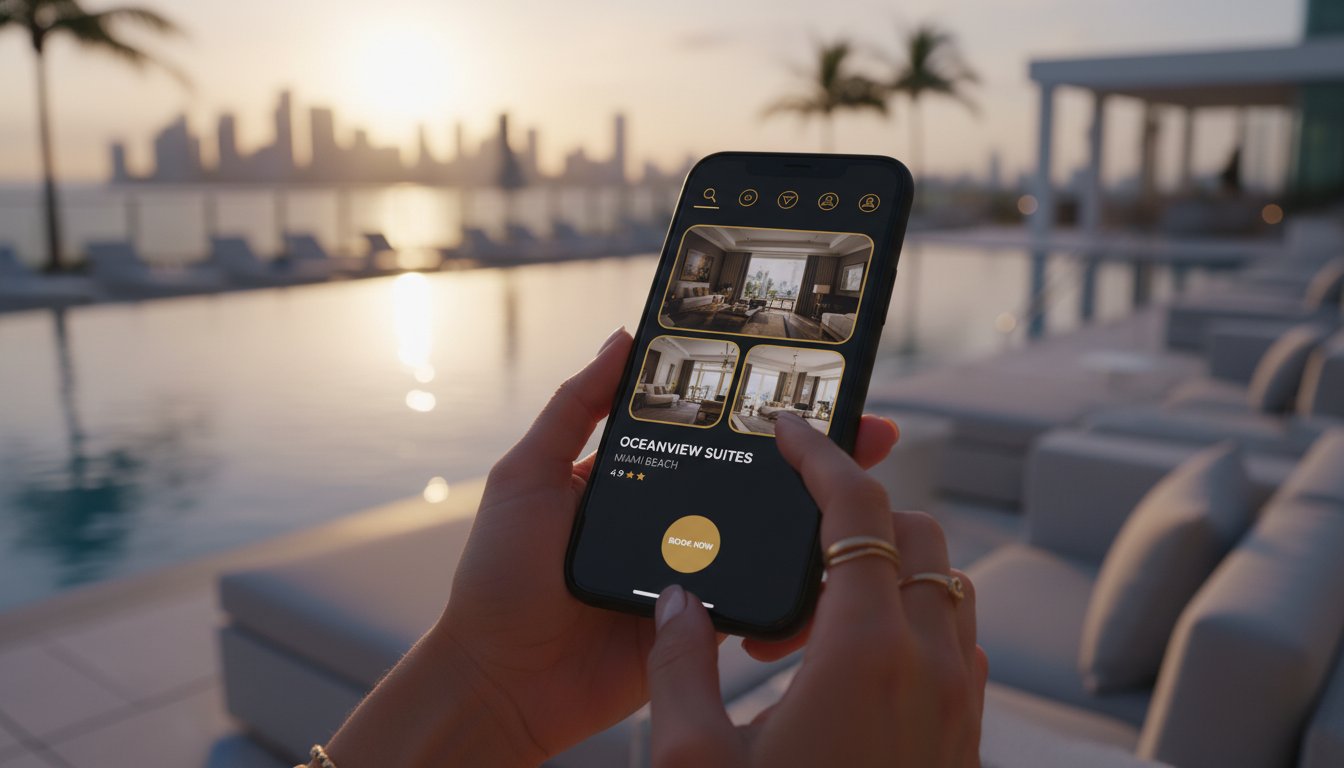
Images act as functional components of the user journey, not just aesthetic decorations. High-resolution photography serves as the primary driver for ux design for hotel booking websites, communicating quality faster than any descriptive copy. We utilize a "Hero" image strategy to capture the specific vibe of a Miami resort instantly. This immediate visual impact establishes an emotional connection. It justifies a premium price point within seconds of the page loading, anchoring the guest's expectations in luxury.
Balance this visual excellence with technical performance to maintain conversion rates. Verified data shows that hotel websites must aim for a mobile page load time of 3 seconds or less. More than half of mobile users abandon a site that drags beyond this window. We employ advanced compression and lazy-loading techniques to ensure that stunning room galleries don't compromise the speed required for a smooth booking. Incorporating video and 360-degree tours further reduces guest anxiety. When a traveler can virtually walk through a suite, they feel a sense of certainty that leads directly to a confirmed reservation.
The Photography-UX Synergy
Place the right imagery at the specific stage of the funnel where it will have the most impact. Lifestyle shots work best during the 'Dream' phase to sell the experience, while detailed architectural shots are essential during the 'Plan' phase. The same principles we apply to restaurant photography miami; capturing texture, light, and atmosphere is essential for hotel room galleries. High-quality visuals provide the proof of value that guests demand before committing to a high-end stay.
Content Management for Visuals
Maintain visual integrity across all devices through dynamic image serving. Your photography must look impeccable on everything from a standard smartphone to 4K and Retina displays. This technical precision is a hallmark of sophisticated ux design for hotel booking websites. We also integrate social proof visuals, such as curated Instagram feeds, to build a layer of trust and authenticity. Seeing real guests enjoy the property provides a relatable context that polished professional shots sometimes lack. Visual storytelling is the bridge between brand identity and the final booking confirmation.
A 5-Step UX Audit for Your Hotel Booking Engine
A beautiful website is useless if the booking engine feels like a different world. Consistency is the hallmark of high-end branding. Perform this audit to ensure your ux design for hotel booking websites remains a conversion powerhouse. We focus on the transition from inspiration to transaction. Every step must feel like a natural extension of your concierge service. If the interface changes drastically during the checkout process, you risk breaking the guest's trust.
- Step 1: Test the 'Speed to Room'. How many seconds pass before a guest sees live availability? If it takes more than one or two clicks to see a rate, you're losing revenue.
- Step 2: Evaluate the mobile checkout. Count the fields. Every unnecessary input on a smartphone increases abandonment. Stick to the essentials to keep the momentum high.
- Step 3: Analyze the 'Upsell' flow. Offering a late checkout or a bottle of vintage champagne should feel like a thoughtful upgrade, not a desperate sales pitch. Use elegant visual cues.
- Step 4: Check for social proof. Integrate verified reviews directly into the booking path. Guests need reassurance at the exact moment they reach for their credit card.
- Step 5: Verify the 'Confirmation' page. The journey doesn't end at payment. Use this space to build anticipation with vibrant imagery and clear next steps for their arrival.
Identifying Friction Points
Data reveals where your guests lose interest. We use heatmaps and session recordings to pinpoint the exact moment of hesitation. Apply the 'Grandmother Test': can a non-technical user complete a reservation in under 2 minutes? If they struggle, your interface is too complex. Many of the pitfalls found in best restaurant website design also plague hotel engines. Overly artistic navigation often sacrifices the clarity required for a final purchase. Efficiency is the truest form of digital luxury.
Optimizing the Booking Engine Integration
The 'Leaky Bucket' syndrome occurs during API redirects. When a guest leaves your site for a third-party booking engine that looks completely different, trust vanishes. Ensure the visual identity remains seamless across every domain. Use scarcity and urgency cues with restraint. High-end guests respond to exclusivity, not aggressive 'only 1 room left' banners that feel cheap. Sophisticated ux design for hotel booking websites balances demand with dignity. If you're ready to transform your booking flow into a high-performance asset, partner with Opendoors Agency for a comprehensive digital audit.
Elevating the Booking Experience with Opendoors Agency
Luxury is a feeling. It begins long before a guest arrives at your lobby. Our Miami-based team merges sophisticated branding with technical expertise to create a ux design for hotel booking websites that converts. We don't just build sites; we craft digital destinations. Our meticulous process begins with high-end architectural photography to capture the soul of your property. We then translate that essence into custom web development. This ensures every digital touchpoint reflects your premium status and justifies your room rates instantly.
A hands-off creative partnership is the ultimate luxury for hotel owners. You focus on delivering world-class hospitality; we manage the visual and technical complexities of your digital presence. We've led the transformation of numerous South Florida hospitality brands by replacing clunky, generic interfaces with bespoke, high-performance experiences. These changes aren't purely aesthetic. They are strategic interventions designed to reclaim revenue from OTAs and build lasting guest loyalty through superior visual UX. We position your brand as the authoritative choice in your market.
Our Comprehensive Approach
We utilize visual storytelling for hospitality as a functional conversion tool. Generic hotel templates often fail to capture the unique narrative of a boutique property. Choosing custom development is a strategic move to ensure your site remains fast, accessible, and elite. We guarantee your brand looks as impeccable on a smartphone as it does in person. This consistency is vital for modern ux design for hotel booking websites. We eliminate the gap between your physical excellence and your digital performance.
Start Your Digital Transformation
Analyze your current digital presence to identify where your revenue is leaking. Our Miami studio offers strategic consultations to help you transition from a standard website to a high-conversion platform. We evaluate your existing photography, your booking flow, and your mobile responsiveness to create a clear roadmap for growth. Stop surrendering your margins to third-party platforms. Elevate your hotel's booking experience with Opendoors Agency and secure your property's digital future with a partner who understands the visual language of success.
Mastering the Digital Guest Journey
The evolution of luxury hospitality in 2026 demands a digital experience that mirrors the precision of a five-star concierge. Superior ux design for hotel booking websites is no longer an optional upgrade; it is a financial imperative. By streamlining the path from discovery to confirmation, you reclaim the revenue lost to high OTA commissions. You've learned how to audit your booking engine and integrate immersive visual storytelling to build trust. These strategies ensure your property remains competitive in an increasingly mobile-centric landscape.
Our team of Miami-based hospitality specialists is ready to lead this transformation. We combine expertise in high-end photography and branding with a relentless focus on direct booking conversion strategies. We handle the technical and creative complexities so you can focus on the art of hosting. Elevate your hotel's digital presence with Opendoors Agency. Your property deserves a digital experience as impeccable as the stay itself.
Frequently Asked Questions
What is the most important UX feature for a hotel website?
A frictionless booking engine is the most critical feature for any luxury property. It must allow guests to check availability and rates within seconds of landing on your site. If the process feels like a technical hurdle rather than a concierge service, guests will abandon the site. Prioritize a persistent booking anchor and a clear, intuitive calendar interface to minimize cognitive load.
How can I improve my hotel website's conversion rate?
Improving conversion requires a strategic blend of speed and trust. Minimize the number of form fields in your checkout process to prevent user fatigue and abandonment. Integrate verified guest reviews and clear value propositions directly into the booking path. These elements provide the necessary reassurance to move a traveler from the planning phase to a confirmed reservation.
Should I use a custom design or a template for my hotel website?
Custom design is the only choice for brands aiming for elite positioning in the hospitality sector. While templates are functional, they often lack the unique visual storytelling and performance optimization required for high-end conversions. A bespoke approach ensures your ux design for hotel booking websites aligns perfectly with your brand identity and technical requirements. It provides the exclusivity that luxury travelers expect.
How do I make my hotel booking process mobile-friendly?
Mobile optimization focuses on the thumb-zone and simplified interactions for one-handed use. Ensure all navigation elements are easily reachable and buttons are appropriately sized for touch. Use mobile-specific features like digital wallet payments and auto-fill fields to accelerate the checkout. A streamlined mobile experience is essential as the majority of reservations now occur on handheld devices.
What role does photography play in hotel website UX?
Photography serves as the primary functional evidence of your property’s value and quality. It justifies your pricing and establishes an immediate emotional connection with potential guests. High-resolution imagery should be used strategically to guide the eye toward conversion points. Professional architectural and lifestyle shots are not just decorations; they are core components of effective visual UX.
How can I compete with OTAs using UX design?
Compete with OTAs by offering a superior, more personalized digital experience that third-party platforms can't replicate. Highlight exclusive direct-booking benefits and provide a level of visual detail that generic listings lack. Your website should feel like an extension of your property's on-site hospitality. A seamless, branded interface builds a direct relationship with the guest from the first click.
What are the common UX mistakes on hotel booking websites?
Common mistakes include hiding the booking button and using low-quality imagery that fails to convey luxury. Slow page load times and complex navigation menus also drive high abandonment rates. Many sites fail to maintain a consistent visual identity between the homepage and the booking engine. Disjointed ux design for hotel booking websites erodes guest trust at the most critical moment of the journey.
How long does a professional hotel website redesign take?
A professional redesign typically spans several months to ensure every technical and creative detail is perfected. This timeline includes strategic planning, high-end photography production, and custom web development. We focus on a methodical progression to ensure the final product meets our standards of visual excellence. A rushed process often sacrifices the performance required for a truly high-conversion result.


