A one-second delay in your page load time can strip 7% from your total conversions before a guest even sees your menu. For a luxury venue, the digital experience is your first handshake. It sets the standard. You've likely felt the frustration of templates that look like every other bistro or fail to showcase your high-end photography. The choice between a template vs custom restaurant website is a strategic investment in your brand's future. It determines whether you lead the market or merely occupy it.
We'll help you decide if a bespoke build or a premium framework is the right path for your 2026 growth. This guide explores the shift toward editorial design and the critical performance standards that define success today. Learn how to integrate visual storytelling with seamless booking systems to drive higher direct reservation rates. Elevate your digital doorstep to match the physical luxury of your venue. From technical Core Web Vitals to the nuances of ADA compliance, we provide the clarity you need to make an informed, authoritative decision for your restaurant's digital identity.
Key Takeaways
- Understand why your digital architecture is the primary touchpoint for 90% of your guests and how it sets the tone for the physical dining experience.
- Evaluate the template vs custom restaurant website choice based on your brand’s need for creative freedom and the ability to showcase high-end photography without constraints.
- Discover the technical SEO advantages of a lightweight, bespoke site structure that meets the zero-tolerance speed expectations of elite clientele.
- Apply a strategic decision matrix to determine if your venue’s status as a destination brand justifies a custom digital investment.
- Learn how a precision-engineered web design serves as a silent ambassador, translating your venue's atmosphere into measurable direct reservations.
The Digital Doorstep: Why Your Website Architecture Matters in 2026
Your website is no longer a secondary asset. It is the primary touchpoint for 90% of your potential guests. In the luxury hospitality sector, the digital experience serves as the "digital doorstep," providing the first sensory cue of what awaits inside your venue. Architecture dictates perception. If a site feels clunky or derivative, guests subconsciously associate that friction with your service standards. We move beyond simple "functional" sites that list hours and locations. We build experiential digital destinations that mirror the physical atmosphere of your restaurant.
The Shift from Information to Digital Experience
Static PDF menus and plain phone numbers are relics of the past. In 2026, guests demand a narrative before they ever step through your doors. Digital aesthetics set the stage. They create a psychological anchor that justifies premium pricing and elite positioning. When we apply foundational web design principles to a bespoke build, we prioritize the user journey as much as the visual flair. Every scroll and transition should feel as intentional as a sommelier’s pour. This level of detail transforms a simple inquiry into an emotional commitment. It validates the guest's choice to dine with you over a competitor.
Why Generic Designs Dilute Premium Branding
Templates suffer from an "uncanny valley" effect. They often look professional at a glance but feel anonymous upon interaction. They lack the soul required for high-end branding. When evaluating a template vs custom restaurant website, consider the message of exclusivity. Generic frameworks are built for the masses; luxury is built for the individual. Using a pre-made structure carries a hidden risk. You might inadvertently use the same layout as a casual fast-food chain or a local bistro. This sameness signals a lack of distinction. It suggests your brand is a commodity rather than a destination.
Luxury thrives on the unique. A custom approach allows you to:
- Showcase high-end photography with full-bleed, immersive layouts.
- Control the narrative flow to highlight heritage and craftsmanship.
- Eliminate technical clutter that slows down the user experience.
A bespoke site ensures your digital presence is as curated as your tasting menu. It eliminates the limitations of rigid grids and pre-set fonts. By choosing custom architecture, you secure a brand asset that grows with your vision. You move from being just another option on a search page to becoming an essential experience.
Template vs Custom Restaurant Websites: A Functional Comparison
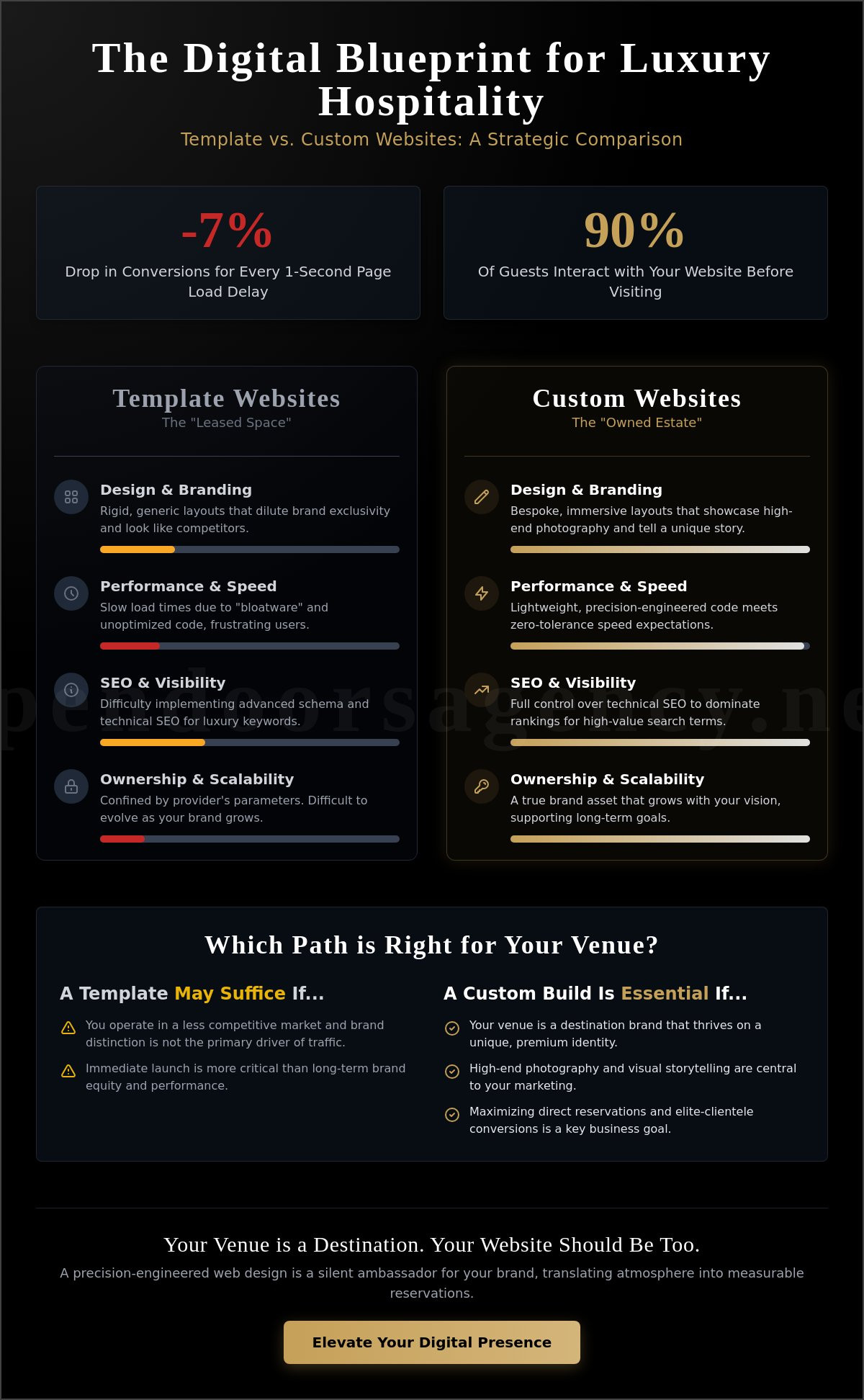
Choosing between a template vs custom restaurant website is a fundamental business decision. It defines your relationship with your digital property. Templates are essentially leased spaces. You operate within the provider's rigid parameters and inherited code. Custom builds represent true ownership. They provide a clean slate for high-resolution photography integration and bespoke functionality. While templates offer immediate deployment, they often create technical debt. A custom build ensures long-term scalability, allowing your digital presence to evolve alongside your physical venue.
The Template Trap: Speed vs. Sameness
Drag-and-drop builders prioritize convenience over character. They limit where you can place luxury visual assets, often forcing your brand into a generic grid. The underlying "bloatware" in these pre-made themes is a silent killer of conversion. Excessive code fragments slow down page speeds and frustrate high-intent guests. This technical weight makes it nearly impossible to follow the most sophisticated best restaurant website design trends. You risk looking like a standard bistro rather than a premiere destination. Templates often struggle with:
- Rigid Layouts: Inability to break the grid for editorial-style storytelling.
- Slow Load Times: Heavy, unoptimized code that penalizes media-heavy sites.
- Limited SEO: Difficulty in implementing advanced schema markup for luxury keywords.
Custom Development: Tailored for Hospitality Conversion
Custom development puts the guest experience first. We build the site around your specific reservation flow rather than struggling with a generic plugin. This architectural clarity is essential for digital marketing for restaurants to succeed in 2026. We optimize every page to handle restaurant photography miami without sacrificing performance. This ensures that your vibrant, high-end content loads instantly on any device. For the affluent Miami guest, the mobile journey must be effortless. A custom site provides total control over this interaction, turning casual browsers into confirmed diners through:
- Bespoke Booking Integration: Seamless connections to platforms like Resy or SevenRooms.
- Visual Precision: Pixel-perfect placement of branding and content production assets.
- Mobile Optimization: A dedicated mobile interface designed for the on-the-go luxury consumer.
Sophisticated brands deserve a digital home that matches their physical artistry. Our web design experts specialize in creating these high-performance environments that drive real business growth.
Beyond Aesthetics: Performance, SEO, and the Luxury User Journey
Luxury is often defined by what you don't see. Behind a stunning visual interface, the technical performance of your site acts as a silent concierge. It anticipates guest needs and removes friction. High-end diners have zero tolerance for clunky, unresponsive layouts. A one-second delay in page load time leads to a 7% reduction in conversions. This makes speed a critical brand asset. When weighing Custom Web Design vs. Website Templates, the deciding factor is often how each handles the weight of high-resolution media. Custom sites handle heavy photography with precision. They ensure your vibrant assets don't compromise your search ranking or user retention.
Speed as a Luxury Signifier
Site speed is the digital equivalent of prompt table service. It signals respect for the guest's time. As of March 2026, Google's performance thresholds have tightened. Your Largest Contentful Paint (LCP) must now be under 2.0 seconds to maintain elite visibility. Interaction to Next Paint (INP) is also a primary ranking signal, requiring a response time under 200 milliseconds. Technical excellence pays off. Websites that pass all three Core Web Vitals thresholds experience a 24% lower bounce rate. Custom code eliminates the "loading lag" common in multi-purpose templates. It strips away unnecessary features to prioritize a fast, fluid experience.
Integrating Reservation Systems Without Friction
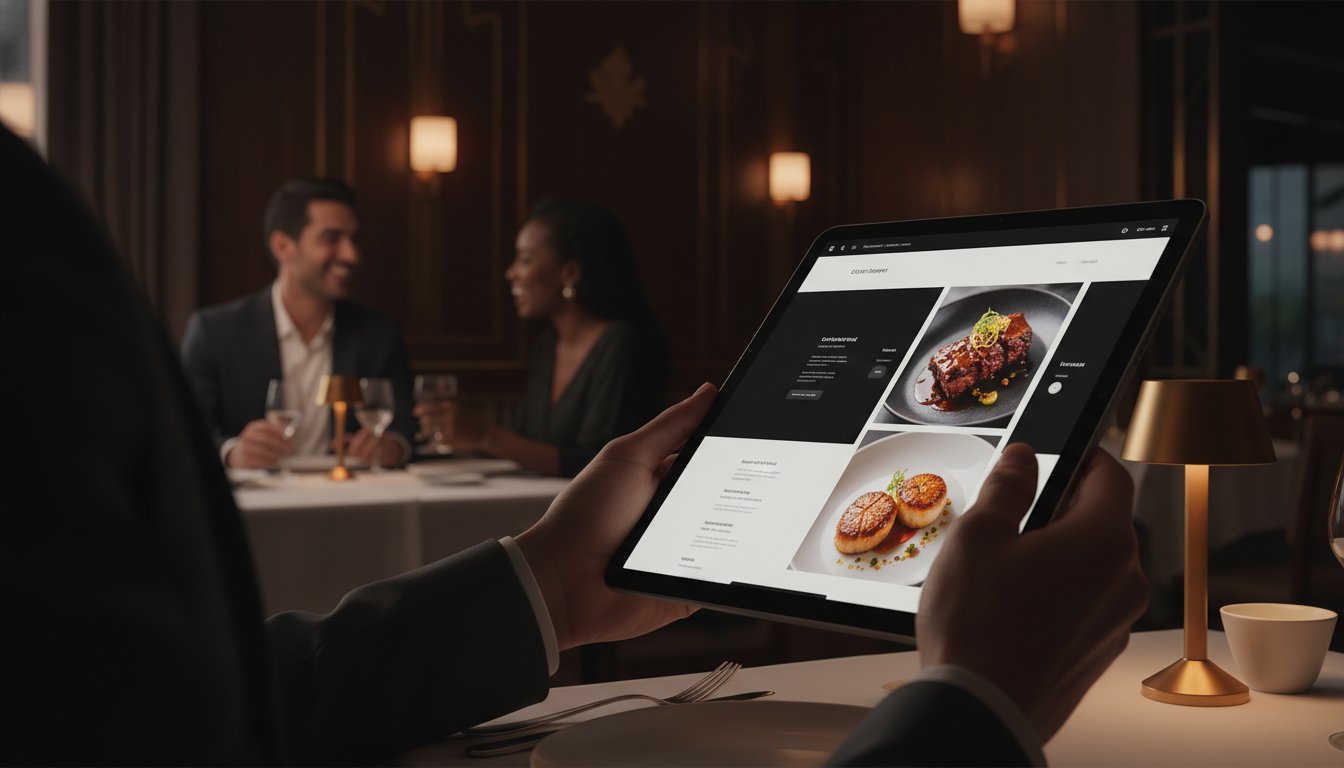
Third-party booking embeds often break the luxury design aesthetic. They feel like an afterthought. Many templates rely on clunky iFrames that create a disjointed user journey. This friction costs you direct reservations. We prioritize custom API integrations that keep the guest within your branded environment. This reduces the number of clicks from the landing page to a confirmed booking. It creates a seamless transition that mirrors the flow of a five-star hospitality experience.
Technical SEO requires more than just keywords. A purpose-built site structure allows for:
- Advanced Schema Markup: Detailed data for "Restaurant" and "Menu" to dominate local search.
- Efficient Media Delivery: Serving high-end content without the bloat of pre-made frameworks.
- Clean URL Architecture: Logical paths that search engines and users can easily follow.
A template vs custom restaurant website isn't just a design choice. It's a performance choice. By investing in a bespoke build, you ensure your venue is discoverable and delightful. You move beyond a simple online presence to a high-performance tool that captures and converts the most discerning guests.
The Decision Matrix: Choosing the Right Path for Your Venue
The choice between a template vs custom restaurant website is not merely a budget discussion. It is an assessment of your brand’s ceiling. A neighborhood spot might thrive on a simple, functional site. A destination brand, however, requires a digital presence that acts as a stage for high-end photography and complex technical integrations. If your vision includes private dining portals or multi-location management, your architecture must support that weight. Evaluate your current assets carefully. If you have invested in professional content production, a rigid template will likely stifle those visuals and diminish their impact.
Consider these variables when building your brand's decision matrix:
- Brand Longevity: Is this a three-year concept or a legacy venue intended to last decades?
- Media Requirements: Does your site need to host 4K video or high-resolution galleries without lag?
- Conversion Goals: Do you need integrated private event booking or a simple external reservation link?
When a Template is the Logical Starting Point
Templates serve a specific purpose for emerging concepts. They are ideal for short-term pop-ups, casual eateries, or testing a new market with minimal financial risk. You can elevate these frameworks by integrating elite photography and custom branding elements. This creates a semi-custom feel that suffices for high-volume, low-friction business models. However, every template has a glass ceiling. As your brand matures, the limitations on visual storytelling and site performance will eventually trigger the need for a migration. Recognizing when you have outgrown the cage is vital for maintaining your elite positioning.
When Custom is Non-Negotiable for Miami Brands
In the hyper-competitive world of hospitality marketing miami, blending in is a terminal error. Miami guests expect high-octane visual experiences. Fine-dining venues and boutique hotels require a unique digital fingerprint that reflects their physical craftsmanship. In this context, the template vs custom restaurant website choice becomes a question of brand survival. Custom builds provide the long-term ROI that templates cannot match. They grow with your brand identity. They allow for seamless multi-concept management and sophisticated data capture. For brands looking to lead the market, a bespoke site is the only path forward. It ensures your digital doorstep is as exclusive as your guest list.
Ready to elevate your presence? Explore our web design services to build a site that matches your vision.
Elevating Your Presence: The Opendoors Custom Approach
Opendoors Agency operates at the intersection of creative artistry and business strategy. We understand that for an elite venue, a website is a living extension of the dining room. It must breathe with the same energy as your physical space. The debate of a template vs custom restaurant website ends when your brand identity becomes the priority. We deliver a comprehensive, hands-off convenience that alleviates your operational burdens. Our team manages the technical architecture while you focus on the guest experience. We build digital legacies that are resilient, scalable, and visually arresting.
Blending Visual Storytelling with Technical Precision
We integrate bespoke photography into the very DNA of your site. Our process ensures that every high-resolution asset is optimized for speed without losing its vibrant detail. We don't just place images; we create a stage for them. Every pixel reflects the craftsmanship of your establishment. We prioritize a mobile-first luxury experience because your guests are often making decisions on the move. By utilizing clean code and dedicated mobile interfaces, we ensure your brand remains elite on every screen. This precision eliminates the clunky transitions found in generic frameworks. It creates a sense of seamlessness that mirrors a five-star service flow.
Your Partner in Long-Term Hospitality Growth
Our commitment extends far beyond the initial launch. We provide ongoing management and content production to keep your digital presence fresh and relevant. As a miami creative agency for hospitality, we understand the local market's demand for constant innovation. We future-proof your brand against shifting 2026 tech trends by maintaining a flexible, purpose-built infrastructure. This proactive approach ensures your site never feels dated or sluggish. We handle the updates, the security, and the visual refreshes.
Working with Opendoors Agency means choosing a tastemaker as your guide. We offer:
- Strategic Content Production: Fresh visuals that keep your social media and web presence aligned.
- Technical Reliability: Expert management that ensures 100% uptime and peak performance.
- Brand Consistency: A unified voice across your web design, branding, and social channels.
Luxury is about the details that others overlook. We've refined our process to capture those nuances, turning your website into your most effective sales tool. Don't settle for a digital presence that merely exists. Let's build something extraordinary that captures the true essence of your venue. It's time to transform your digital doorstep into a destination of its own.
Securing Your Brand’s Digital Legacy
Your digital presence is the first course of your guest’s experience. It must be as refined as the service at your tables. We've explored how the choice between a template vs custom restaurant website dictates your brand’s ceiling in a competitive market. A bespoke build isn't just a technical choice. It's a strategic investment in performance and visual storytelling. By prioritizing speed, search visibility, and seamless reservation flows, you ensure your venue remains a destination of choice for the modern, affluent diner.
Success in 2026 requires a partner who understands the nuances of high-end hospitality. Opendoors Agency brings boutique Miami-based expertise to every project. We specialize in the seamless integration of high-end photography and sophisticated web design. This ensures your brand identity remains consistent across every touchpoint. We handle the complexities of digital management so you can focus on the artistry of your venue. Elevate your brand with a bespoke digital experience from Opendoors Agency and set a new standard for excellence. Your vision deserves a stage that matches its ambition.
Frequently Asked Questions
Is a custom restaurant website better for SEO than a template?
Custom builds offer superior technical SEO through clean code and precise schema markup. Templates often carry bloated code that slows performance and dilutes search signals. A purpose-built architecture allows for deeper optimization of "Menu" and "LocalBusiness" schema. This precision helps your venue dominate local search results in 2026. Custom sites also pass Core Web Vitals more consistently, which Google uses as a primary ranking signal.
How much more does a custom website cost compared to a premium template?
Custom websites represent a higher initial investment because they involve bespoke design and specialized engineering. Templates offer lower entry costs but frequently lead to higher long-term expenses through limited scalability and technical debt. Choosing between a template vs custom restaurant website requires weighing immediate savings against the lifetime value of a unique brand asset. Custom builds are investments in brand equity that grow with your business.
How long does it take to build a custom restaurant website in 2026?
A custom build typically requires eight to twelve weeks from the initial strategy to the final launch. This timeline accounts for branding, high-end photography integration, and rigorous performance testing. Templates can be deployed in a matter of days. However, they lack the meticulous curation and technical precision required for an elite hospitality brand. We prioritize a methodical progression to ensure your digital doorstep is flawless upon arrival.
Can I switch from a template to a custom website later without losing data?
You can migrate your content, but the transition requires expert management of SEO equity and URL structures. We focus on preserving your search rankings and guest data during the shift. It's an ideal opportunity to audit your visual assets and upgrade your content production for a more sophisticated audience. A well-managed migration ensures that your transition to a more elevated image is seamless and professionally executed.
Do I need a custom website if I already use a third-party booking platform like OpenTable?
Yes, because your website is your brand's primary narrative stage. Third-party platforms handle the transaction, but your site earns the guest's interest. A custom build allows for seamless API integration. This keeps the user journey within your curated environment rather than redirecting guests to a generic interface. It ensures that the transition from viewing your menu to booking a table feels like a single, high-end experience.
What are the main maintenance differences between template and custom sites?
Templates require frequent plugin and theme updates that can occasionally break your layout or slow down your site. Custom sites are built with leaner, more stable code, which significantly reduces the risk of technical glitches. Maintenance for a custom site focuses on ongoing performance optimization and fresh content refreshes. This proactive approach ensures your site remains a high-performance tool rather than an operational burden.
Can a template-based website ever look truly luxury?
Templates can look professional with high-end photography, but they rarely achieve the tastemaker quality of a bespoke build. Luxury is found in the details, such as custom transitions, unique typography, and non-linear layouts. A template vs custom restaurant website comparison reveals that templates feel like a leased space. Custom builds feel like an owned estate. They offer the creative freedom required to translate physical atmosphere into a digital destination.
Why is mobile-first design so critical for Miami restaurants?
Over 72% of restaurant searches happen on mobile devices, especially in high-traffic hubs like Miami. Guests are often searching for a table while on the move or exploring the city. A mobile-first approach ensures that your vibrant visuals and booking systems load instantly. This captures high-intent diners before they scroll to a competitor. In the Miami market, a slow mobile experience is the digital equivalent of a closed door.