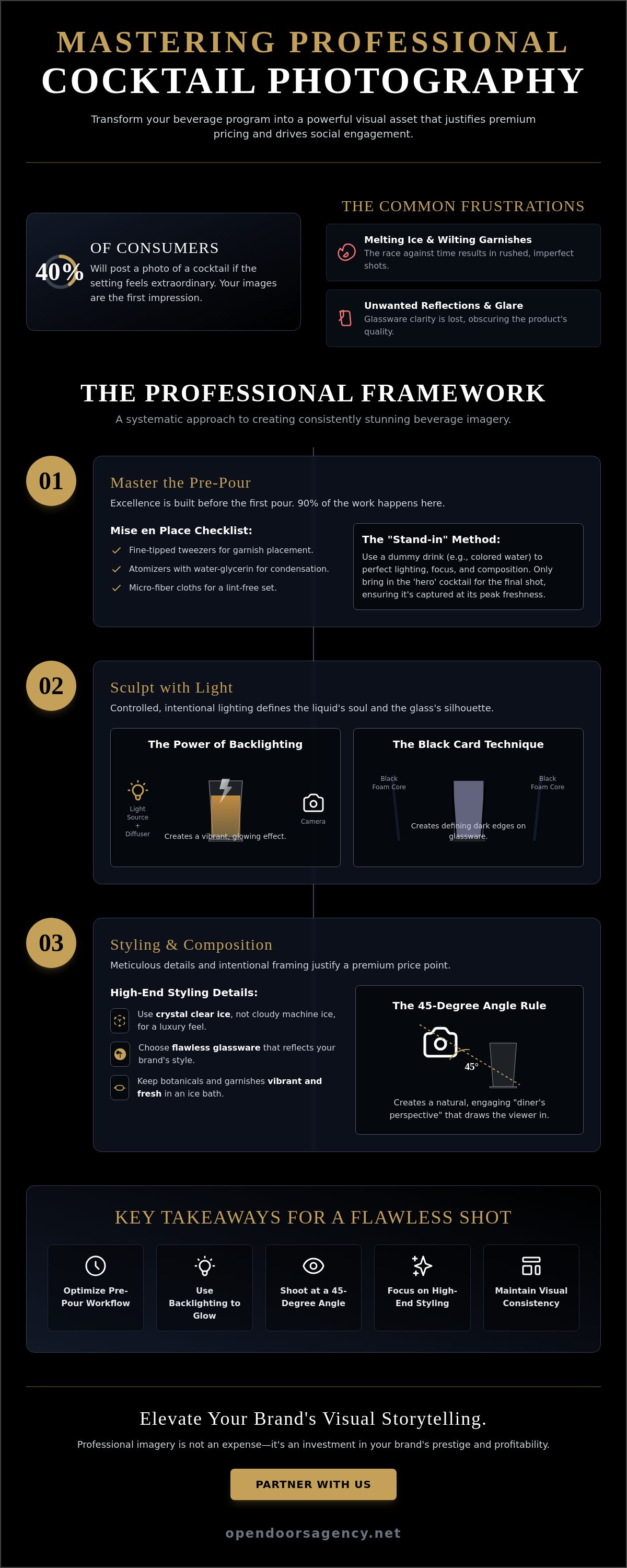
Forty percent of consumers now report they would be inclined to post a photo of a cocktail if the setting feels extraordinary. In the luxury hospitality sector, your digital presence is often the first point of contact for a guest. You understand that a signature drink is more than a recipe; it's a biographical element of your brand. Yet, capturing that essence is notoriously difficult. You've likely faced the frustration of ice melting before the first shutter click or unwanted reflections obscuring the clarity of your finest glassware. These technical hurdles often result in flat, unappetizing images that fail to reflect your venue's true caliber.
Mastering how to photograph cocktails professionally requires a precise blend of liquid engineering and high-end brand storytelling. This guide provides the expert framework needed to transform your beverage program into a powerful visual asset. You'll learn to utilize backlighting to make spirits glow and select the right macro lenses for texture-rich details. We cover the professional techniques for lighting and styling that create crisp, vibrant images. This approach ensures your visual identity justifies premium pricing while driving significant social media engagement.
Key Takeaways
- Optimize your pre-pour workflow. This ensures you capture the perfect shot before ice melts or garnishes wilt.
- Master how to photograph cocktails professionally by using backlighting to make your spirits glow.
- Use the 45-degree angle. This compositional rule creates a natural diner’s perspective that drives engagement.
- Focus on high-end styling details. Meticulous elements like clear ice and fresh botanicals justify your premium pricing.
- Maintain visual consistency. Your signature lighting style should reinforce your overall brand strategy in every frame.
Mastering the Pre-Pour: Why 90% of Professional Cocktail Photography Happens Before the Shaker
Excellence in beverage photography isn't found in the shutter click. It's built in the minutes before the first pour. When you learn how to photograph cocktails professionally, you realize that speed is your only defense against condensation and dilution. Preparation is the antidote to melting ice and wilting garnishes. It allows you to move with the decisive grace of a master bartender. Establish a workflow that prioritizes speed without sacrificing aesthetic precision.
Organize your workspace like a professional bar station for maximum efficiency. Every tool should be within arm's reach. Use the "Stand-in" Method to protect your product's integrity. Place a dummy drink, perhaps just water with food coloring, to nail your lighting and focus first. This allows you to experiment with shadows and highlights without the pressure of a ticking clock. Only when the frame is perfect do you bring out the hero drink. This proactive strategy ensures your final image captures the cocktail at its absolute peak.
The Mise en Place of Beverage Photography
Professionalism is a matter of discipline. Gather all tools before you begin to maintain a seamless flow. This meticulous approach draws heavily from the foundational principles of food photography, where styling is as critical as the camera settings. In a live bar environment, having these elements ready prevents the chaos of service from bleeding into your production:
- Fine-tipped tweezers for precise garnish placement.
- Atomizers filled with a water-glycerin mix for long-lasting, realistic condensation.
- Micro-fiber cloths to eliminate stray dust or lint from the set.
Pre-batch your liquids to ensure color consistency across multiple shots. Prepare your garnishes in an ice bath to maintain their structural integrity and keep botanicals looking vibrant under hot studio lights.
Selecting the Perfect Vessel
Glassware is the architecture of your image. Your choice should reflect the venue’s architectural style and brand era. A vintage coupe tells a different story than a minimalist highball. Check for imperfections. High-resolution sensors will reveal chips, bubbles, or scratches that ruin the luxury feel. Cleanliness is non-negotiable. Use steam and lint-free cloths for a pristine finish. Even a single fingerprint can break the spell of effortless luxury you're working to create. Your glassware must be as flawless as the service your guests expect.
Sculpting with Light: Professional Lighting Techniques for Glass and Liquid
Light is the tool you use to carve the cocktail out of the darkness. It defines the liquid's soul and the glass's silhouette. Understanding how to photograph cocktails professionally starts with mastering the relationship between transparency and reflection. In moody bar environments, ambient light is often your enemy. It is frequently too yellow, too weak, or too scattered to produce a high-end result. Professional imagery requires intentional, controlled sources that highlight the drink's vibrancy without washing out the venue's atmosphere.
Side lighting is equally vital for creating depth. Use it to accentuate textures like salt rims, citrus peels, or the delicate fuzz on a mint leaf. It creates the shadows that give a drink its three-dimensional form. When working with clear glassware against light backgrounds, employ the Black Card technique. Position thin strips of black foam core just out of frame on either side of the glass. These cards create a dark stroke or outline on the edges of the glassware. This provides the definition needed to separate the vessel from its environment. For more advanced insights, studying professional beverage photography tips can help refine these delicate adjustments.
The Power of Backlighting
Place your primary light source behind the glass to illuminate the liquid’s color. This is the industry standard for making spirits glow from within. Without it, dark liquids like negronis or stouts can appear muddy or opaque. Use a diffuser to create a soft, ethereal glow rather than a harsh hotspot on the glass. Adjust the height of your light to control the caustics. These are the beautiful, dancing light patterns that refract through the liquid onto the table surface. This technique adds a sense of luxury that flat lighting can never achieve.
Managing Reflections in High-End Glassware
Glass is a mirror. Treat it as such. Use large white foam boards to create clean, intentional reflections. These highlights define the shape of the glass and suggest a polished, elite environment. Avoid Christmas tree lighting. Multiple small lights create messy, distracting highlights that look amateur. Stick to one or two large, soft sources. Position your camera and lights strategically to hide the reflection of the tripod or your own equipment. If your brand requires this level of aesthetic precision, our professional photography services can ensure your menu looks as premium as the spirits you pour.
Beyond the Garnish: Styling for High-End Hospitality Brands
Styling is about creating a sensory experience that the viewer can almost taste. It transforms a simple beverage into a brand experience. In the world of elite hospitality, luxury is in the details. This means using perfectly clear ice and vibrant, fresh botanicals that look like they were plucked seconds before the shoot. Mastering how to photograph cocktails professionally involves moving beyond the liquid itself. You must curate every element within the frame to suggest a specific lifestyle and level of service.
Select a "Hero" garnish. This is the most perfect specimen from your entire batch. Whether it is a dehydrated citrus wheel or a sprig of slapped mint, it must be flawless. Use ingredients found within the cocktail to balance the frame and tell the flavor story. If the drink features notes of star anise or cinnamon, place these raw elements nearby. This visual shorthand helps the guest understand the profile of the drink immediately. It creates a narrative that feels both authentic and intentional.
The Art of the "Professional Fake"
Commercial shoots often last hours. Real ice is your enemy in these scenarios. Use high-quality acrylic ice for long-duration productions. These replicas don't melt, ensuring your composition remains locked. To create the perfect, long-lasting condensation, apply a 50/50 mixture of glycerin and water with an atomizer. This creates beads of "sweat" that stay in place for the entire session. If you are shooting highly reflective silver or copper mugs, use a professional dulling spray. This reduces distracting glares while maintaining the metallic luster of the vessel.
Narrative Styling and Atmosphere
Context provides value. Incorporate the bar’s environment to ground the drink in its home. A hint of a leather stool or a sliver of a marble bar-top adds depth and texture. These elements suggest the venue's atmosphere without overwhelming the subject. Use "human touch" elements to breathe life into the frame. A hand reaching for the glass or a partial pour captured in mid-air creates a sense of momentum. This proactive style of content production makes the viewer feel like a guest at the table.
Maintain a consistent color palette that aligns with your regional market. For instance, the restaurant photography miami landscape often demands high-contrast, vibrant tones that reflect the city's energy. Your lighting and styling choices should always reinforce this visual identity. Consistency is the hallmark of luxury. It ensures your brand remains recognizable across every platform, from your website to your social feeds.
Framing the Pour: Compositional Rules for Dynamic Drink Shots
Composition guides the viewer’s eye through the narrative of the cocktail. It dictates the emotional response and the perceived value of the drink. When you understand how to photograph cocktails professionally, you move beyond simple documentation. You begin to direct the audience's attention with surgical precision. Every element in the frame must serve a purpose. Whether you are aiming for a moody, late-night vibe or a bright, brunch-time aesthetic, your framing is the foundation of the story.
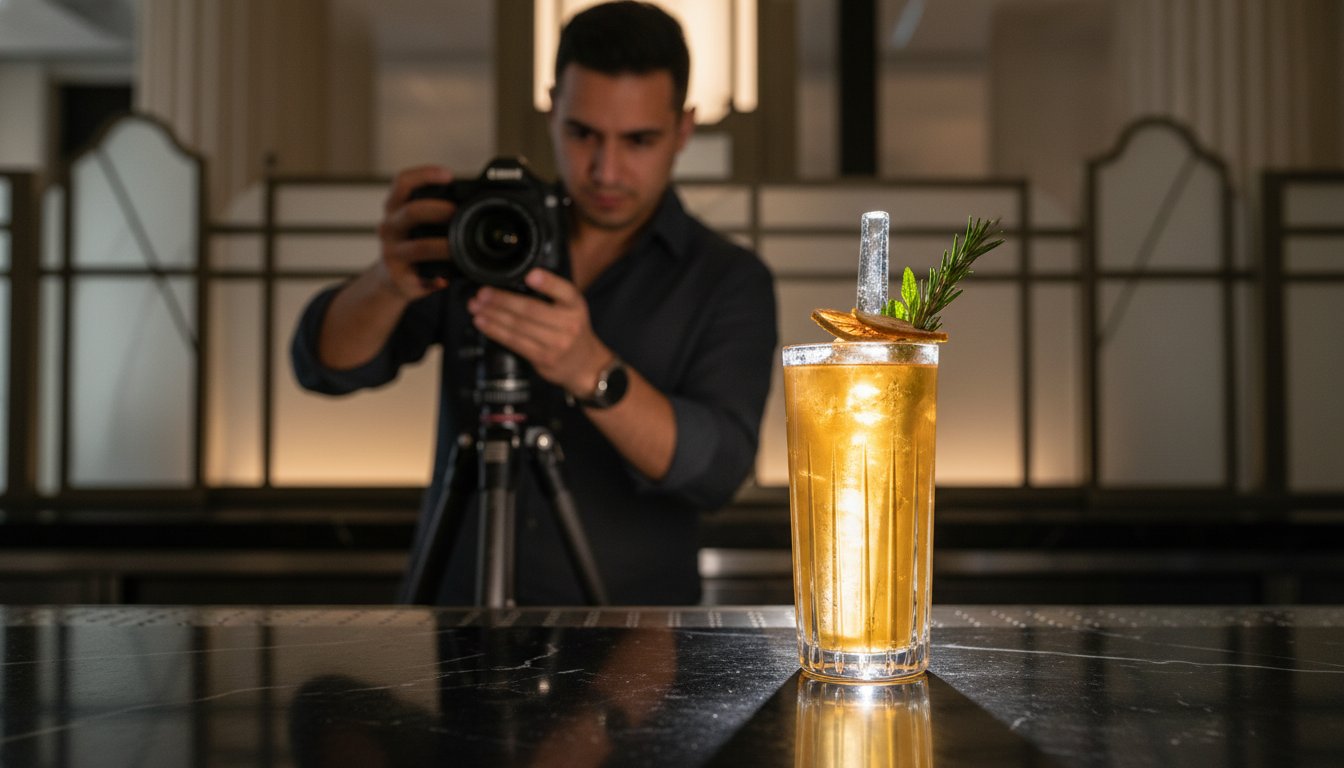
The 45-degree angle remains the industry gold standard for menu photography. It provides the "diner’s perspective," replicating exactly what a guest sees when the drink is placed on the bar. This angle feels accessible and inviting. For drinks featuring distinct layers, elegant gradients, or tall glassware, a straight-on shot is superior. It emphasizes the vertical architecture of the pour. Conversely, the flat-lay perspective excels for minimalist aesthetics. This top-down view is ideal for showcasing complex surface garnishes or the clarity of a single, large ice cube.
Depth of Field and Visual Hierarchy
Control the visual hierarchy through your camera settings. Use a wide aperture, typically between f/1.8 and f/2.8, to blur the background. This technique isolates the drink as the undisputed hero of the frame. It removes distractions and focuses the viewer’s full attention on the liquid. Ensure the front rim of the glass and the primary garnish remain in razor-sharp focus. Create layers by placing a bottle or a raw ingredient in the soft-focus foreground. This adds a sense of three-dimensional depth that feels high-end and intentional.
Leading Lines and the Rule of Odds
Guide the viewer’s gaze toward the subject. Use bar tools like long-handled spoons or linen napkins as leading lines that point directly toward the glass. Embrace the rule of odds to create a more natural, sophisticated arrangement. A grouping of one or three glasses feels more organic and visually pleasing than even pairings. Always leave intentional negative space in your composition. This provides essential room for social media captions or web design elements. If you want to refine your brand's visual narrative, explore our premium content production services to elevate your digital presence.
Elevating the Bar: Integrating Brand Strategy into Every Frame
A great photo is useless if it doesn't look like your brand. It must communicate your venue's soul instantly. Visual storytelling transforms a commodity into an aspiration. You aren't just selling a drink. You're selling a lifestyle. Mastering how to photograph cocktails professionally requires a shift from technical execution to strategic alignment. Every highlight and shadow must be intentional. A mismatched aesthetic suggests a lack of attention to detail. In the hospitality sector, detail is everything.
Consistency is the hallmark of luxury. Your lighting style should be your signature. It is the visual thread that connects a guest's first impression on social media to their experience at the bar. High-quality assets don't just fill a feed. They build digital equity. This is a strategic investment that justifies premium pricing and attracts an elite clientele. When your imagery reflects the true caliber of your service, the transition from follower to guest becomes seamless.
Consistency Across the Digital Presence
Apply a signature color grade that matches your venue’s specific interior lighting. Warm, amber tones suit a subterranean speakeasy. Crisp, high-key light fits a coastal rooftop lounge. This visual cohesion ensures your cocktail photography complements your restaurant branding guide. It creates a unified identity across every touchpoint. Plan your shots for multiple formats simultaneously. An Instagram Reel requires vertical headroom. A website banner needs a wide, cinematic crop. A print menu demands high-resolution clarity. Thinking in multiple formats saves time and maximizes your content's reach.
When to Partner with a Creative Agency
Recognize when the complexity of a campaign exceeds in-house capabilities. A smartphone is sufficient for a quick behind-the-scenes story. A high-stakes seasonal launch requires more. Partnering with an agency provides a tastemaker perspective that defines your visual identity with authority. We understand the nuances of how to photograph cocktails professionally for a global audience. Professional content production retainers ensure a steady stream of high-end assets. This keeps your brand relevant and elite without adding to your staff's operational burden. You focus on the art of the pour. We focus on the art of the image.
Define Your Venue's Visual Legacy
Excellence in beverage photography is an exercise in both technical precision and strategic vision. You've discovered that the secret to high-end imagery lies in meticulous pre-pour preparation and the art of sculpting liquid with backlighting. Every garnish and every reflection must serve the broader narrative of your brand. These details collectively justify your premium positioning and invite guests into a curated world of luxury. When you align your visual assets with your brand's core identity, you transform a simple menu into a powerful marketing engine.
Understanding how to photograph cocktails professionally is the first step toward building a dominant digital presence. As Miami-based hospitality specialists, Opendoors Agency brings a tastemaker approach to visual storytelling. We maintain a proven track record with luxury hotels and bars, transforming standard menus into aspirational lifestyle assets. Elevate your hospitality brand with professional content production and let us handle the complexities of your visual identity. Your signature serves deserve to be captured with the same sophistication you bring to the bar.
Frequently Asked Questions
What is the best camera for professional cocktail photography?
Utilize a high-resolution full-frame mirrorless camera with at least 30MP. This is the current industry standard for capturing the intricate textures of liquid, ice, and glass. These systems provide the superior dynamic range necessary for high-end hospitality imagery. Pair your body with a 100mm macro lens to isolate fine details like citrus oils or delicate garnishes.
How do I prevent ice from melting during a long photo shoot?
Switch to high-quality acrylic ice for commercial productions that exceed thirty minutes. These replicas maintain their structural integrity under warm studio lights and never dilute the drink's color. If you prefer the look of real ice, always use a "stand-in" drink to finalize your lighting. Only introduce the hero cocktail once your frame and focus are perfectly locked.
Should I use natural light or studio flashes for drinks?
Opt for professional studio flashes or high-output LEDs to ensure brand consistency. Natural light is too volatile for luxury hospitality branding; it changes by the minute. Artificial sources allow you to master how to photograph cocktails professionally by replicating your signature lighting style across every shoot. This control is essential for maintaining a unified digital presence.
How do I photograph clear drinks without them looking like water?
Master the art of backlighting to reveal the liquid's viscosity and character. This technique makes the spirit glow and highlights the subtle differences in texture. Use etched or crystal glassware to add visual interest through refraction. These details ensure your clear cocktails look intentional and premium rather than flat or unfinished.
What are the most important props for a cocktail shoot?
Focus on tools that enhance the sensory narrative of the drink. Fine-tipped tweezers and atomizers for condensation are non-negotiable for precision styling. Incorporate high-end bar-top materials like marble, polished brass, or dark leather to ground the subject in a luxury environment. These props suggest a specific lifestyle and venue caliber without distracting from the cocktail itself.
How do I remove unwanted reflections from glassware in post-processing?
Minimize reflections on set first by using large white foam boards to create clean, intentional highlights. This proactive approach reduces the need for heavy editing. If stray glares persist, use professional retouching software to clean the glass. Be careful to maintain the natural highlights that define the vessel's three-dimensional shape and polished finish.
Can I take professional cocktail photos with a smartphone?
Use a smartphone for casual, behind-the-scenes social media updates, but not for your primary brand assets. Professional cocktail photography requires the optical precision and sensor size of a dedicated camera. Smartphones often struggle with the complex light refractions found in glassware. High-resolution cameras are necessary for website banners, print menus, and large-scale digital displays.