
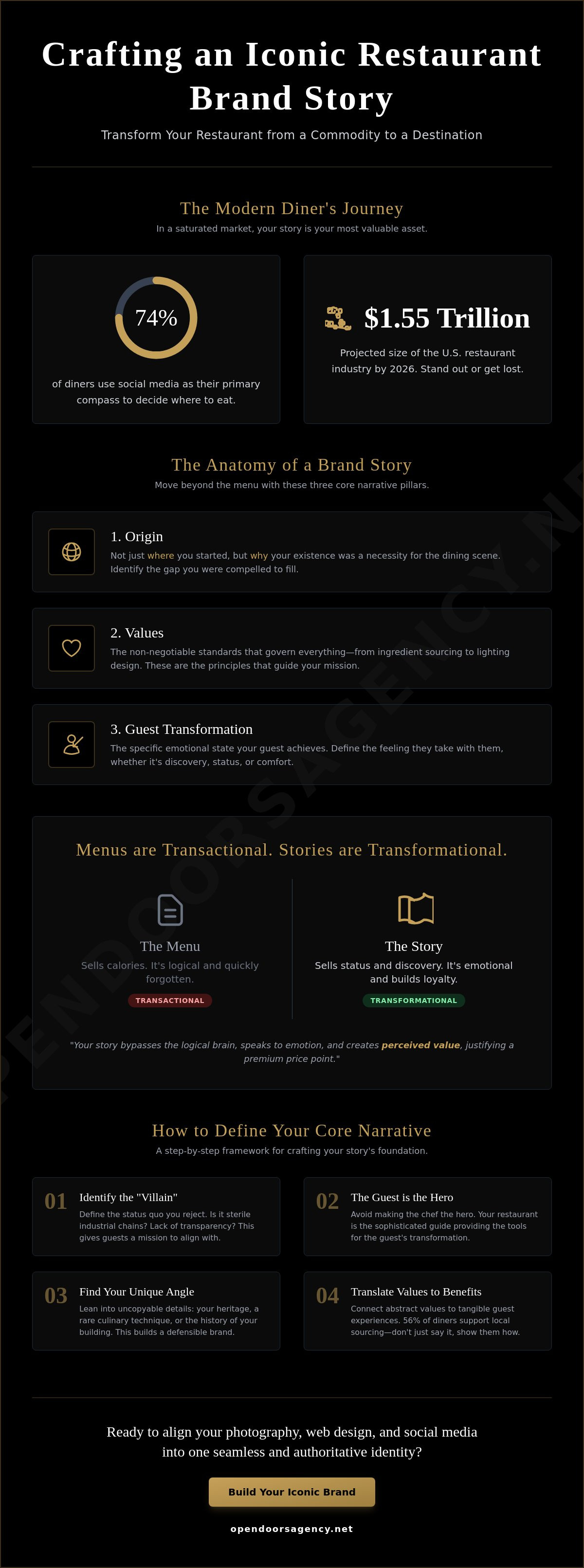
74% of diners now use social media as their primary compass to decide where to eat. In a U.S. restaurant industry projected to reach $1.55 trillion by the end of 2026, standing out requires more than a menu. It requires a soul. If your narrative feels like a generic template, you remain a commodity in a sea of noise. Mastering how to write a restaurant brand story is the definitive way to transform your space into an iconic destination that guests crave before they ever see a table.
You likely feel the frustration of a faceless brand, where your physical excellence fails to translate into your digital narrative. It's a disconnect that costs reservations. We'll show you how to bridge that gap by turning your unique hospitality philosophy into a powerful, high-end marketing asset. You'll learn to craft a narrative that commands attention and secures long-term guest loyalty. This guide provides a strategic framework to align your photography, web design, and social media into one seamless and authoritative identity.
Key Takeaways
- Define the soul of your hospitality to move beyond food quality and establish an elite market position.
- Discover how to write a restaurant brand story that uses sensory-rich hooks and addresses market gaps to engage sophisticated diners.
- Treat your photography as the visual body language of your brand, providing immediate proof of the experience you promise.
- Fragment your narrative into micro-content for social media and weave it into your website’s user experience for maximum impact.
- Identify the "villain" your restaurant opposes to create an authentic emotional connection and foster deep guest retention.
The Anatomy of a High-End Restaurant Brand Story
A restaurant brand story is the soul of your hospitality business. It's the invisible thread that connects your kitchen's output to your guest's identity. In 2026, "good food" is no longer a differentiator; it's a baseline expectation. With the U.S. restaurant industry projected to reach $1.55 trillion in sales, diners are overwhelmed with choices. They don't just want a meal. They want to belong to something. Understanding how to write a restaurant brand story means moving past a dry chronological history. A boring "About Us" page listing your opening date is an obituary. A brand narrative is a living, breathing promise of an experience.
To build a narrative that commands attention, you must master three core pillars:
- Origin: Not just where you started, but why your existence was a necessity for the dining scene.
- Values: The non-negotiable standards that govern everything from your ingredient sourcing to your lighting.
- Guest Transformation: The specific emotional state your guest enters when they walk through your doors and how they feel when they leave.
Why Narrative Beats a Standard Menu
Menus are transactional. Stories are transformational. Humans are biologically hardwired to respond to the art of storytelling because it bypasses the logical brain and speaks directly to the emotions. This psychological connection creates "perceived value." It's the reason a guest will gladly pay a premium for a dish that comes with a narrative of regenerative farming or heritage preservation. You aren't selling calories. You're selling status, discovery, and curated moments. When you master how to write a restaurant brand story, your price point becomes a reflection of the narrative's depth rather than just the cost of ingredients.
The Role of Emotional Resonance
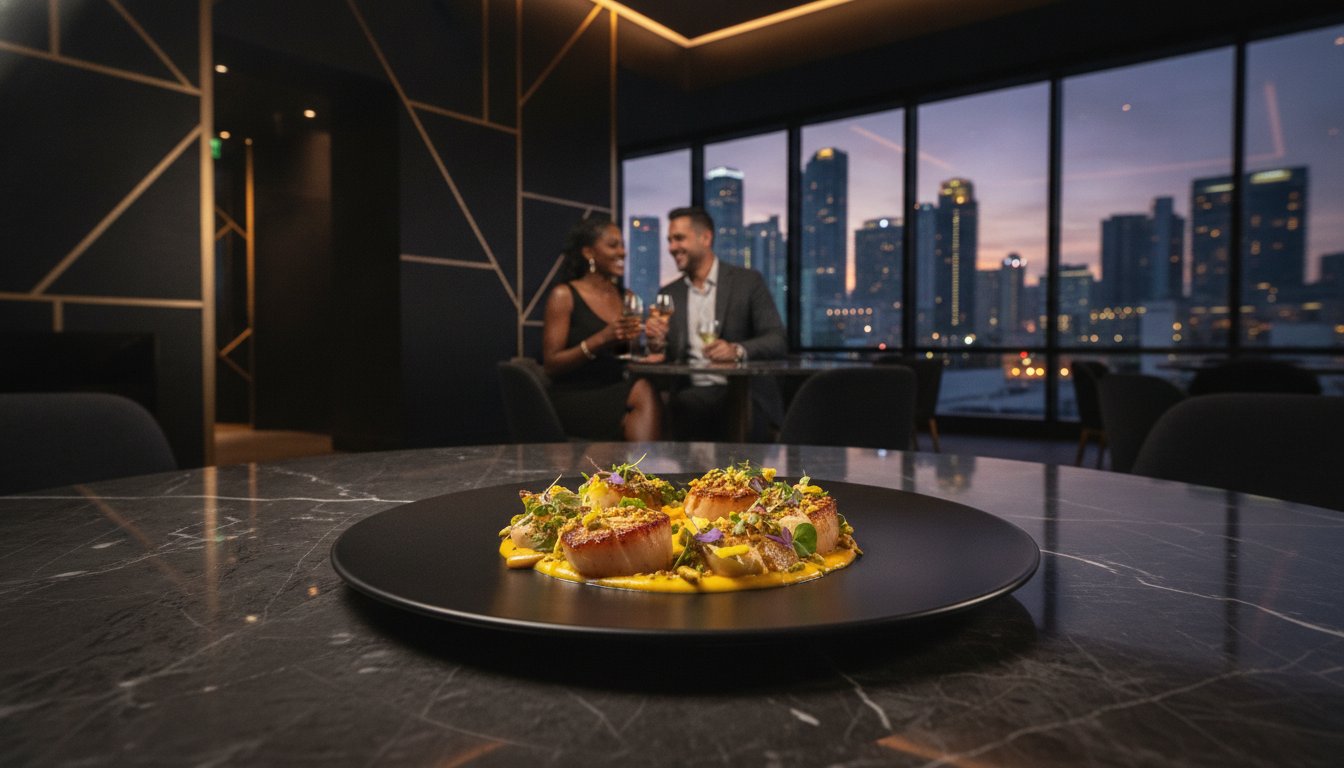
High-end diners aren't just hungry; they're seeking a specific feeling. This might be the quiet exclusivity of a hidden lounge or the vibrant discovery of a fusion concept. To see how a premier venue creates a sophisticated backdrop for high-end gatherings, learn more about the atmosphere at Serra On Vine. Your story must map directly to these emotional triggers. If your brand promises comfort, your narrative should feel like a warm embrace. If it promises innovation, it should feel like a bold challenge. Your "emotional north star" is the single feeling you want every guest to associate with your name. Define it clearly. It guides every piece of photography, every line of copy on your website, and every social media post you produce.
The "Why" Behind the Menu: Defining Your Core Narrative
Your founding inspiration is the heartbeat of your business. It's rarely about a specific recipe. It's about a void you noticed in the market and felt compelled to fill. To begin the process of how to write a restaurant brand story, perform an internal audit. Ask yourself what was missing from your city's dining scene before you arrived. Were the options too fast, too loud, or perhaps too disconnected from the land? This gap is where your narrative begins. It provides the "why" that justifies your existence in a crowded $1.55 trillion industry.
Every compelling narrative requires a conflict. In the world of high-end hospitality, your "villain" is the status quo you've chosen to reject. This might be the sterile industrialism of modern food chains or the lack of transparency in global supply chains. By identifying this antagonist, you give your guests a reason to align with your mission. However, avoid the common mistake of making the chef the hero. The guest is the hero of this story. Your restaurant acts as the sophisticated guide, providing the atmosphere and artistry they need to achieve a specific transformation, whether that is social status or sensory discovery.
Drafting a mission statement should feel human, not corporate. Ditch the jargon about "synergy" and "quality." Focus on the visceral impact. "We exist to preserve the disappearing traditions of coastal fire-cooking" carries far more weight than "We serve grilled seafood." It invites the guest into a legacy.
Identifying Your Unique Angle
Look beyond the plate to find your extraordinary edge. This might be your heritage, a rare culinary technique, or even the specific history of your building. Timeless brands are built on these uncopyable details rather than fleeting trends. Avoid the "trendy" trap. Instead, lean into the authentic quirks of your kitchen operations. When these elements are highlighted through expert branding, they become the pillars of a narrative that competitors cannot replicate.
Connecting Values to the Guest Experience
Abstract values like sustainability must be translated into tangible benefits. In 2026, 56% of diners intentionally support restaurants that source ingredients locally. Don't just claim to be "local." Explain how a specific heirloom grain from a nearby farm creates a texture that defines your signature dish. Your sourcing story adds a layer of flavor that guests can actually taste. The Chef’s Philosophy should read like a manifesto of intent, linking their technical mastery to the emotional experience of the meal. This connection ensures your values aren't just bullet points on a website; they are the very essence of the dining experience.
Visual Proof: Integrating Imagery into Your Narrative
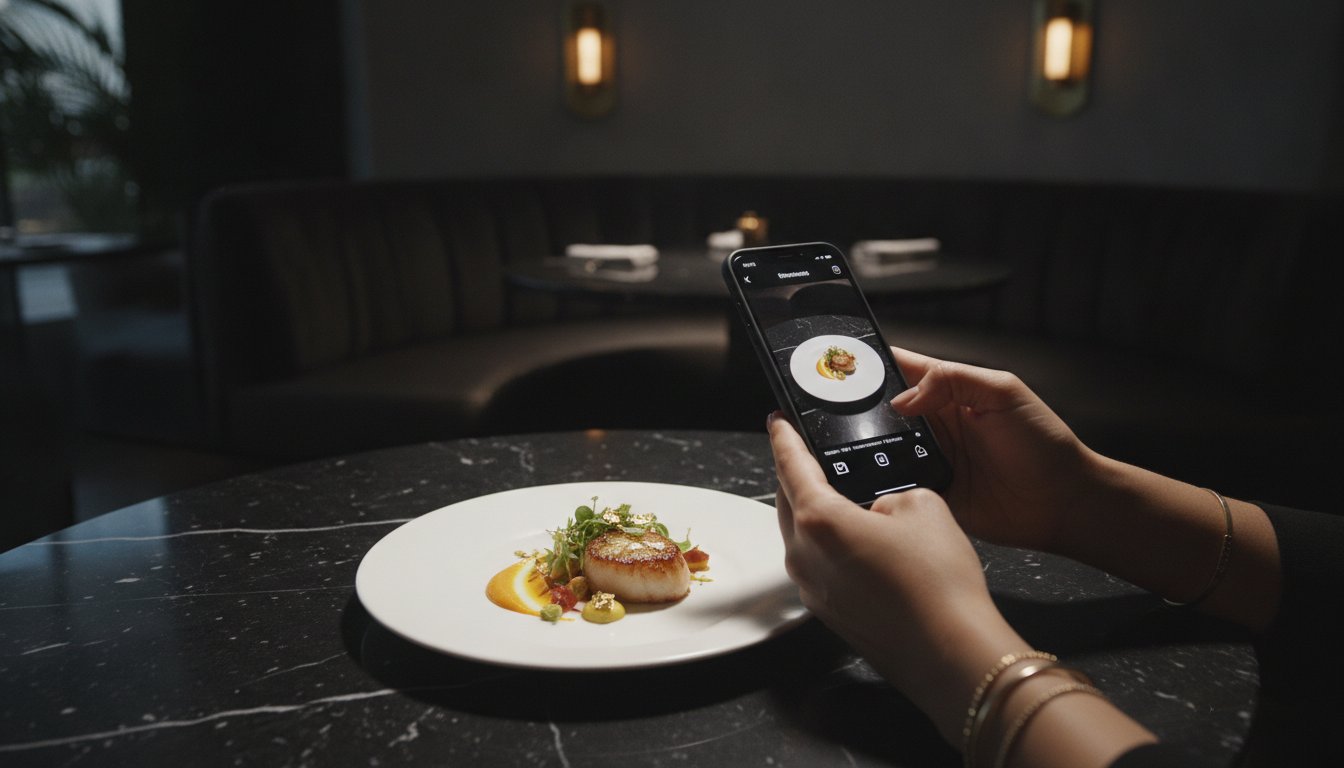
Your brand story begins long before a guest reads a single word of your "About" page. In 2026, the visual is the first chapter of your narrative. 54% of diners browse platforms like Instagram and Facebook specifically to choose where they will eat. This makes your imagery the digital "body language" of your brand. It communicates your level of service, your price point, and your atmosphere in a fraction of a second. If you are learning how to write a restaurant brand story, you must treat your photography as the undeniable proof of your written claims. Words promise the experience; imagery proves it.
Standard food photography often functions as a clinical documentation of a plate. It shows the ingredients, but it fails to tell a story. Narrative hospitality photography, by contrast, captures the soul of the establishment. It focuses on the play of light across a velvet banquette or the confident, precise movement of a sommelier. These visual cues are essential for luxury brands to establish elite positioning. Aesthetic consistency across your social media and website ensures that the guest's digital journey feels as curated as their physical meal. Inconsistency creates doubt, and doubt is the enemy of premium pricing. When your visuals align perfectly with your narrative, you move from being a place to eat to becoming an iconic brand guests crave.
Photography as Storytelling
Mastering the "vibe" involves more than just a high-resolution camera. It requires an intimate understanding of how lighting and texture evoke specific emotions. Capturing the condensation on a crystal glass or the steam rising from a wood-fired hearth adds a sensory layer to your digital presence. Use architectural photography to tell the story of your space’s design and flow. Professional imagery is the most critical investment for a high-end brand story. It bridges the gap between a physical dining experience and a digital narrative, turning viewers into guests. High-quality content production ensures that your brand’s vibrancy is never lost in translation.
Visual Cues for Luxury
Premium hospitality brands rely on subtle visual markers to signal exclusivity and status. Think of minimalist compositions, deep shadows, and a sophisticated color palette that reinforces your written tone. These elements act as a silent language that speaks directly to your target audience. For those seeking Premium Restaurant Photography in Miami, the goal is to find a partner who can translate your "emotional north star" into a cohesive gallery. A curated visual identity ensures that every digital touchpoint feels like an invitation to an elite experience. This visual-narrative ecosystem is what ultimately commands attention and drives reservations.
Writing the Narrative: A Step-by-Step Workshop
Transforming a vision into a written narrative requires more than just creative flair; it demands a strategic framework. To master how to write a restaurant brand story, you must follow a narrative arc that moves beyond simple description. This workshop breaks the process into four decisive steps designed to capture the attention of high-end diners.
- Step 1: The Hook. Start with a sensory-rich moment. Instead of stating your opening date, describe the clink of crystal at sunset or the scent of aged oak that greets a guest at the door. Anchor the reader in the experience immediately.
- Step 2: The Conflict. Address the gap in the current dining scene. If the local market is saturated with transactional, impersonal service, name that frustration. This identifies the "villain" your restaurant exists to defeat.
- Step 3: The Solution. Introduce your unique approach as the antidote. Explain how your specific culinary philosophy or service model provides the escape or discovery the guest is seeking.
- Step 4: The Invitation. Call the guest into the story. Shift the focus from what you do to what they will experience. Invite them to take their place as the hero in the atmosphere you've created.
Developing Your Brand Voice
Your brand voice is the personality behind the prose. Choose a tone that reflects your positioning: authoritative, playful, sophisticated, or rustic. Imagine your brand as a person. Is it a worldly tastemaker with a penchant for rare vintages or a bold innovator challenging culinary norms? Once defined, this persona must remain consistent across your captions, menus, and website. Partnering with experts in branding allows you to refine this voice until it resonates effortlessly with your target audience.
Refining the Narrative
Mastering how to write a restaurant brand story involves a disciplined editing process. Cut the fluff. Focus on active, punchy verbs that create momentum. Every sentence must pass the "So What?" test. If a statement doesn't clearly articulate a benefit or an emotional trigger for the guest, it's a distraction. Consider the transformation of a heritage bistro that stopped listing history and started describing the preservation of disappearing flavors. The shift in engagement was immediate. Results-driven storytelling prioritizes impact over volume, ensuring your message is never lost in dense blocks of text.
Bringing Your Story to Life Across Digital Touchpoints
A compelling narrative is only as effective as its distribution. Once you've mastered how to write a restaurant brand story, you must shard that narrative into micro-content that lives where your guests are. In 2026, 74% of diners use social media to choose their next table. This means your story cannot remain a static document. It must become a vibrant, multi-channel experience. From the digital first impression to the physical menu, every touchpoint is a strategic opportunity to reinforce your brand's elite positioning.
Integrating your narrative into the user experience (UX) of your website ensures a seamless transition from curiosity to reservation. The story continues the moment a guest walks through your doors. Your physical menus, environmental signage, and even staff interactions are live extensions of your brand voice. When your team speaks the same language as your social media captions, the brand feels authentic and authoritative. Measure your success through qualitative engagement and quantitative bookings. A successful narrative doesn't just look good. It drives tangible business growth.
Storytelling on Social Media
Use Instagram Reels and TikTok to showcase the "Faces Behind the Brand." Luxury doesn't mean being cold or distant. It means being intentionally authentic. Show the precision of the prep work or the quiet focus of the sommelier before the first guest arrives. This behind-the-scenes content humanizes your expertise without sacrificing your aesthetic standards. It's about proving the artistry you've promised in your written narrative. High-quality content production allows you to maintain a polished, aspirational look while providing the "raw" transparency that 2026 diners demand.
The Website as Your Digital Flagship
Your website is your most powerful digital asset. 88% of diners search online before visiting, and 91% have looked up a menu before ever walking through your doors. Your "About" page shouldn't just list historical facts. It should convert visitors into guests by making them the hero of the story you're telling. For those in the high-end hospitality sector, seeking Hotel Website Design Miami ensures that your digital presence matches the sophistication of your physical space. Seamless design allows your story to flow naturally through the booking process, reducing friction and increasing loyalty.
Every word and image must work in harmony to prove your value proposition. If your story promises exclusivity, your digital flagship must feel exclusive. If you're ready to transform your presence and command the attention your brand deserves, Elevate your brand story with Opendoors Agency.
Defining Your Legacy Through Narrative
Your restaurant is no longer just a physical space; it's a narrative ecosystem. You've now explored how to identify your core "why," structure a compelling workshop-style draft, and prove your claims through high-end imagery. Mastering how to write a restaurant brand story ensures your message remains coherent from the first Instagram scroll to the final clink of crystal. Consistency builds the deep trust required for premium positioning and long-term guest retention. It's the difference between a guest visiting once and a guest becoming a lifelong advocate for your brand.
Transitioning from a commodity to an icon requires expert execution and a tastemaker's eye. As Miami-based hospitality experts, we specialize in award-winning visual storytelling and comprehensive branding that commands attention. Our content retainers provide the hands-off convenience you need to focus on your operations while we elevate your digital image to elite status. Elevate your brand with a professional strategy session at Opendoors Agency. Your legacy is ready for its next chapter. Let's build it together.
Frequently Asked Questions
What is the difference between a restaurant mission statement and a brand story?
A mission statement is an internal, operational compass that defines your purpose and functional standards. A brand story is an external, emotional narrative designed to connect with the guest's identity. While the mission guides your team's daily actions, the story invites your audience into a specific atmosphere and sensory experience.
How long should a restaurant brand story be?
Length depends entirely on the platform and the intended depth of engagement. Your digital flagship website should host a comprehensive narrative of 300 to 500 words. For social media, shard this into punchy, sensory-rich fragments of 50 words or less. Strategic impact always outweighs volume in high-end hospitality.
Do I need a professional writer to create my restaurant brand story?
You can certainly draft your core values, but a professional ensures the tone matches your desired elite positioning. Experts understand the nuances of how to write a restaurant brand story that converts curiosity into reservations. They bridge the gap between your culinary vision and the guest's emotional triggers with authoritative precision.
How often should I update my restaurant’s narrative?
Your core emotional north star should remain timeless and consistent. However, you should refresh the supporting micro-content and visual proof every six to twelve months to reflect seasonal shifts or menu evolutions. This keeps the brand feeling vibrant and relevant without losing its foundational identity or heritage.
Can a brand story help me attract better staff?
Yes. Top-tier talent seeks more than just a paycheck; they want to belong to a meaningful legacy. A strong narrative defines your culture and attracts professionals who align with your non-negotiable standards. It transforms your restaurant from a mere workplace into a prestigious institution people are proud to represent.
How do I tell my story if my restaurant doesn’t have a long history yet?
Focus on your intent and the specific void you've arrived to fill. History is about where you've been, but a brand story is about why you exist right now. Highlight your unique culinary philosophy, your sourcing standards, and the bold innovation you bring to the current dining scene.
Where is the best place to feature my brand story on my website?
Weave your narrative throughout the entire user experience rather than hiding it on a single page. Use a sensory-rich hook on your homepage to grab attention immediately. Reserve the dedicated About page for the full deep-dive narrative that establishes your authority and invites guests into your world.
Does a brand story actually impact the bottom line?
Narrative directly influences perceived value and justifies premium pricing. By shifting the focus from ingredient costs to the total experience, you create a brand guests crave regardless of price. This drives guest loyalty and increases retention, which are essential for maintaining healthy profit margins in a competitive market.