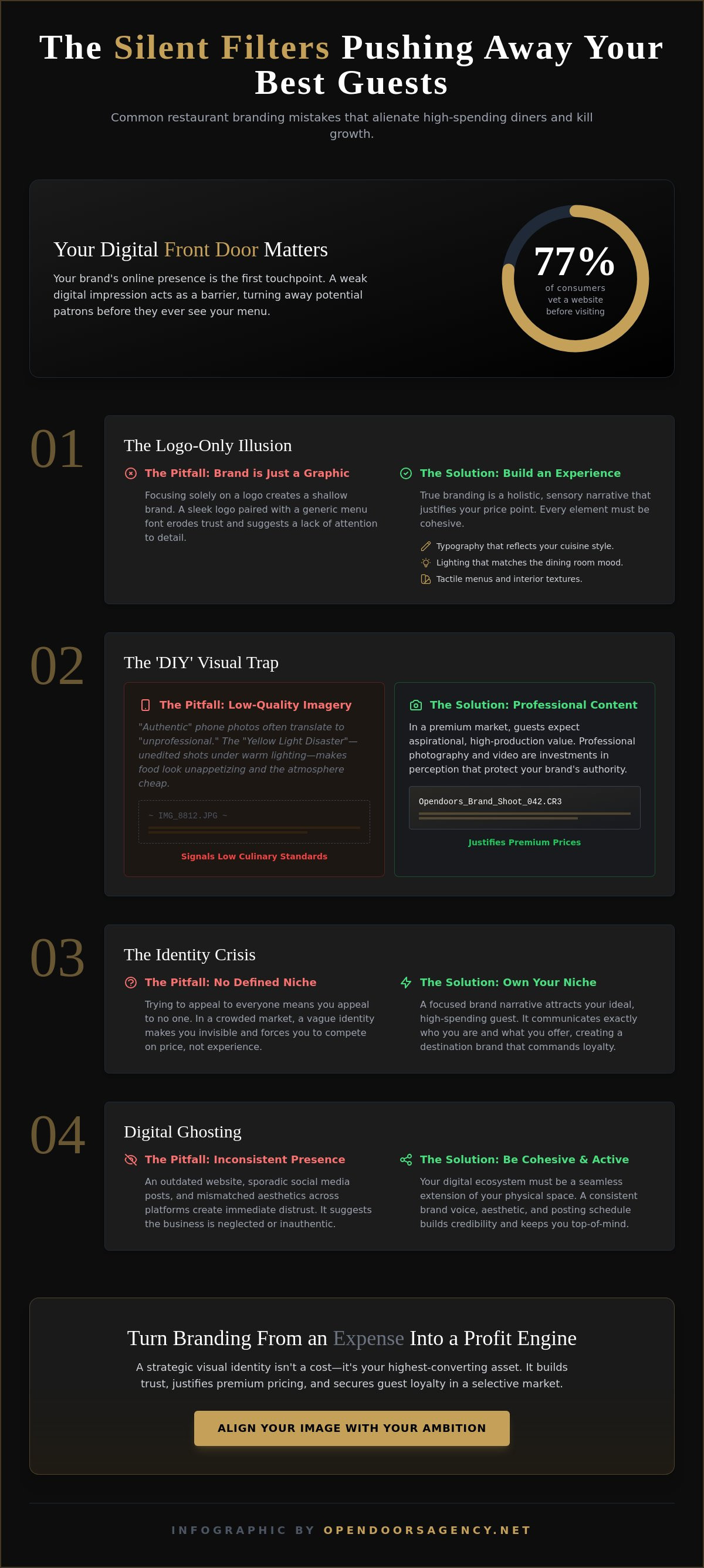
With 77% of consumers vetting a website before they even consider a reservation, your brand is either an invitation or a barrier. If you're seeing a decline in high-spending guests despite serving an exceptional menu, your visual identity likely lacks the authority required to command premium prices. It's a common frustration for owners who feel invisible in a crowded market or find themselves trapped attracting customers who only care about the bill. You know your food is elite; yet your digital footprint suggests something far more ordinary. These common restaurant branding mistakes act as silent filters, pushing away the very guests you want to serve.
This guide identifies the specific pitfalls currently alienating premium diners and killing your growth in 2026. We'll move beyond generic logos to discuss how disciplined content production and intentional web design create a sensory-driven narrative. You'll learn how to audit your social media presence and leverage professional photography to ensure your brand feels like a destination. We're providing a roadmap to transform your visual identity into a high-conversion asset that secures loyalty even as consumers become more selective. It's time to align your image with your ambition.
Key Takeaways
- Move beyond the logo. Learn why your brand is the emotional residue left with your guests long after they leave the table.
- Stop the "DIY" visual erosion. Discover how professional content production and photography protect your premium perception from the damage of low-quality imagery.
- Identify and fix common restaurant branding mistakes that lead to an identity crisis in crowded markets like Miami.
- Secure your digital front door. Understand the necessity of a cohesive web design and social media strategy to stay visible to modern diners.
- Reframe branding as a profit engine. Shift your perspective from viewing aesthetics as a luxury to seeing them as the primary driver of business growth.
The Logo-Only Illusion: Why Your Brand is More Than a Graphic
Many operators believe a polished logo marks the completion of their brand's journey. It doesn't. A logo is merely a signature; it is not the story itself. One of the most common restaurant branding mistakes is treating the visual icon as a finish line rather than a starting point. True branding is the emotional residue left in a guest's mind after they pay the check. It is a collection of memories and perceptions that define your value. When you focus solely on the graphic, you ignore the narrative that actually drives loyalty.
We often see an atmospheric gap that confuses potential patrons. This happens when a sleek, minimalist logo promises a high-end experience, but the menu font looks like it belongs in a fast-casual chain. This misalignment erodes trust instantly. Your visual language must extend far beyond the icon. It encompasses the textures in your upholstery, the patterns on your coasters, and the specific warmth of your lighting. These elements work in silence to justify your price point and elevate the guest's perception of quality.
Deconstructing the Brand Experience
Sensory branding creates the depth that a flat graphic cannot. Every touchpoint reinforces your identity. The weight of a tactile menu, the curated tempo of the music, and the subtle scent in the lobby contribute to a holistic perception. Typography plays a critical role here. It communicates your cuisine style and price bracket before a guest reads a single ingredient. Applying consistent brand management principles ensures that your brand voice matches your physical interior. If your space feels minimalist and modern, your language should be equally sharp and precise.
The Danger of a Disconnected Identity
A disconnect between your digital and physical branding creates immediate guest distrust. Research indicates that 77% of diners visit a website before deciding where to eat. If your site suggests sophistication but uses generic stock imagery, the illusion shatters. Guests are savvy. They sense when a brand lacks authenticity. In a 2026 market, relying on content that isn't your own is one of the common restaurant branding mistakes that signals low culinary standards. It suggests that the reality doesn't live up to the digital promise.
Perform a comprehensive audit of every touchpoint to secure your reputation. Start at the sidewalk and follow the guest journey to the final check. Ask yourself:
- Does the social media aesthetic match the actual table setting and plate presentation?
- Does the web design reflect the specific lighting and mood of the dining room?
- Is the brand voice used in captions consistent with the level of service provided?
If the narrative breaks at any point, the guest's confidence breaks with it. Align these details to transform your brand from an expense into a powerful asset. This discipline ensures that your image is in expert hands and your growth remains steady.
The 'DIY' Visual Trap: How Low-Quality Imagery Erodes Premium Perception
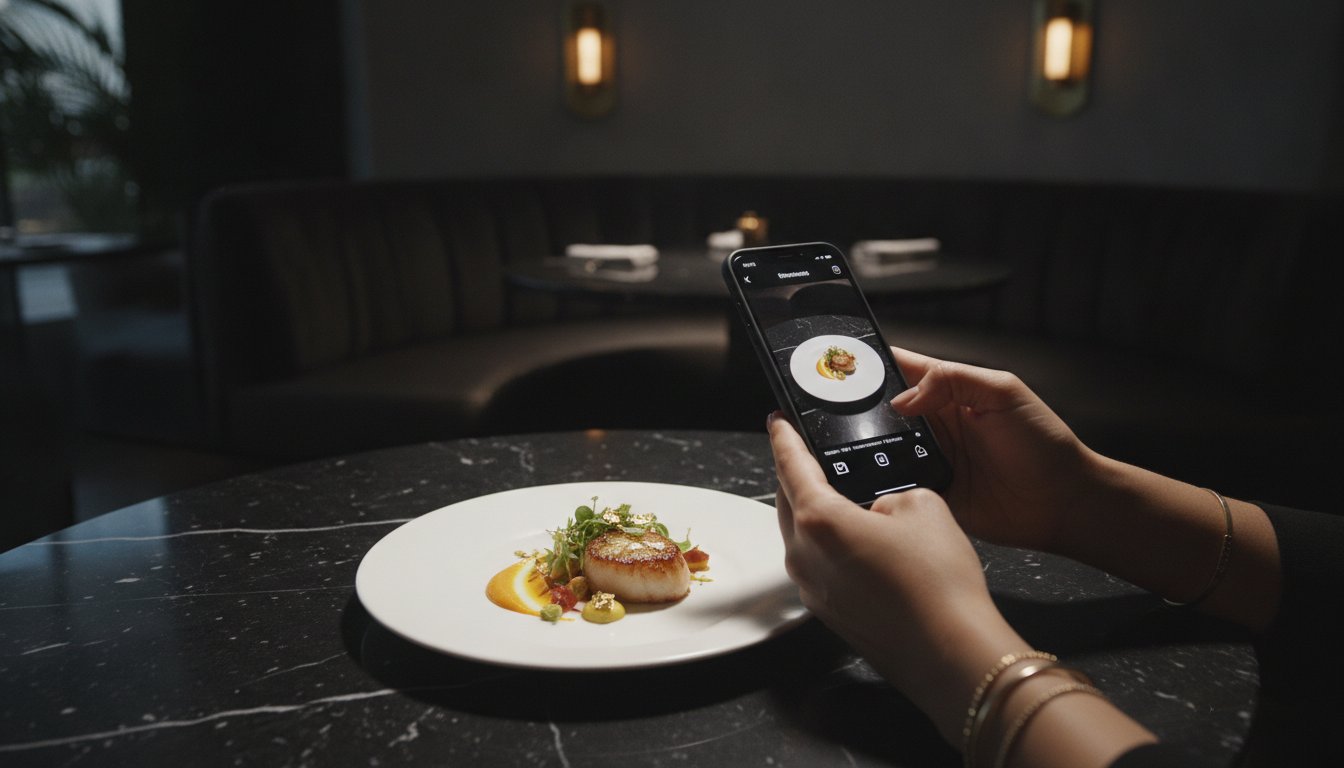
Many restaurant owners believe that an iPhone and a steady hand are sufficient for a modern marketing strategy. They aren't. While "authenticity" was the buzzword of the last decade, the 2026 market demands a different standard. Diners are now visually literate and highly selective. One of the most common restaurant branding mistakes is assuming that guests want "relatable" or "raw" content when they are looking for a luxury experience. At a premium price point, low-production value doesn't signal honesty. It signals low culinary standards.
The "Yellow Light" disaster is a primary offender in this category. Unedited interior shots taken under warm house lights often result in muddy, sickly hues that kill the atmosphere you worked so hard to create. If your digital presence feels dim and unpolished, your guests will assume your kitchen follows the same lack of discipline. Avoiding these common marketing mistakes is essential for maintaining a brand that justifies Miami's signature cocktail prices, which now frequently reach the high $20s. You aren't just selling food. You are selling an aspirational lifestyle.
Professional vs. Amateur Visuals
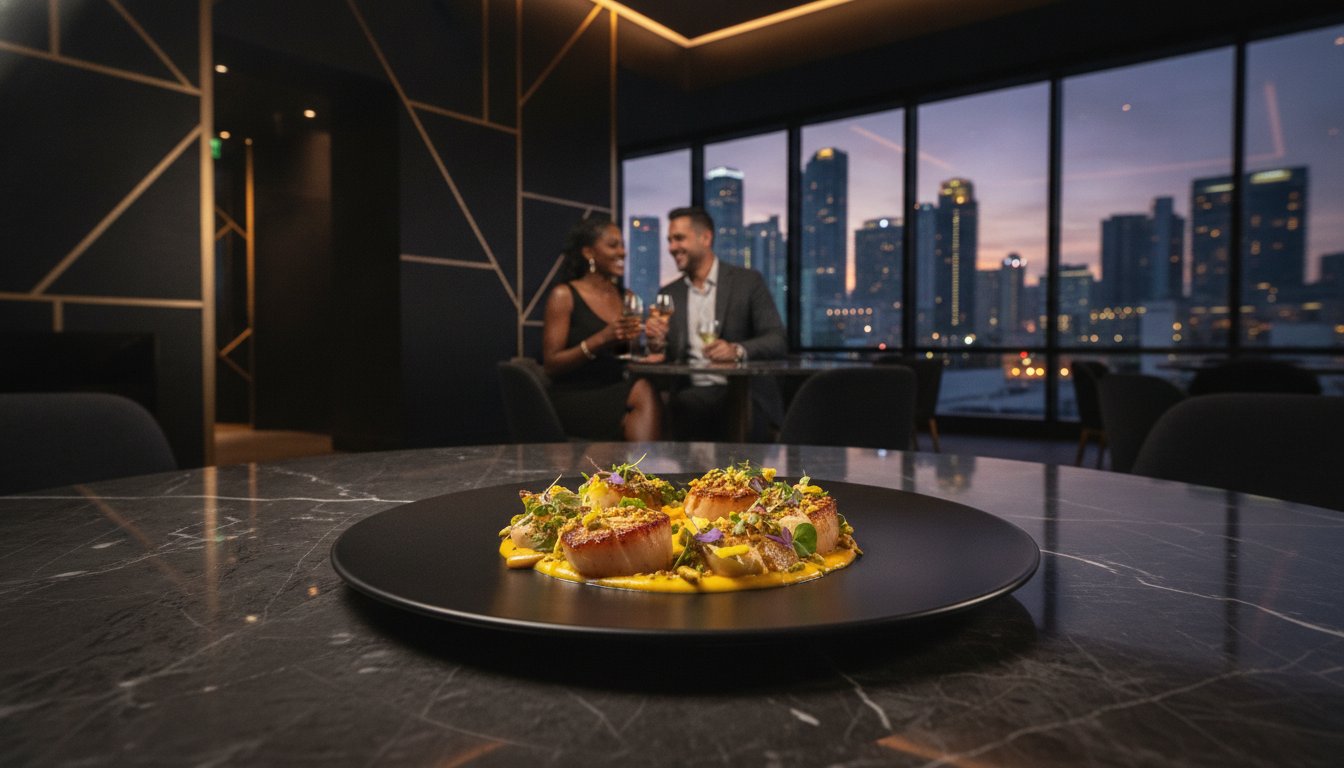
Investing in professional restaurant photography miami offers a tangible return on social conversion. Expert food styling is the secret weapon that separates Michelin-starred identities from neighborhood bistros. It's about more than just a clear picture. It's about using lighting as a brand asset to create mood and depth. Professional lens work captures the steam, the texture of the garnish, and the vibrancy of the ingredients in a way that a mobile device simply cannot replicate. This level of detail builds immediate trust with the 88% of diners who conduct online research before choosing where to dine.
The Hidden Cost of 'Good Enough'
Poor imagery directly impacts your average check size and the demographics of your guests. High-spenders seek out visual polish because it serves as a proxy for quality control. There is a deep psychological link between visual excellence and perceived taste. A grey, shadows-heavy photo of a prime ribeye doesn't evoke hunger; it triggers a visceral sense of culinary disappointment. When your visuals are "good enough," you invite guests who are looking for a deal rather than an experience. To attract those seeking the "WOW factor" and opulent presentations, your imagery must be flawless. Partnering with experts in content production ensures your visual narrative remains as refined as your menu. It's the difference between being a choice and being a destination.
The Identity Crisis: Failing to Define a Niche in the Miami Market
Miami is a landscape defined by hyper-competition and maximalist expectations. One of the most common restaurant branding mistakes is the belief that success requires appealing to every tourist and local resident simultaneously. It's a tempting myth, but a brand for everyone is a brand for no one. In South Florida, where the dining scene is an extension of fashion and status, neutrality is invisible. You must stand for something specific or risk being forgotten before the first course is served. With 79% of diners choosing a restaurant based on a strong brand personality, being "generic" is a high-cost gamble you can't afford to take.
The "Me-Too" mistake is particularly prevalent in neighborhoods like the Design District or Miami Beach. Operators often copy the aesthetic of the current "hot" spot, hoping to capture some of its momentum. While trends like the "Steakhouse Plus" movement, which blends traditional steaks with Asian or Mexican influences, are surging in 2026, simply mimicking a competitor's look isn't a strategy. It's a surrender of your own identity. Implementing restaurant marketing best practices requires more than following a trend. It demands a unique restaurant brand story that commands attention and justifies your position in the market.
Defining Your Ideal Guest Profile (IGP)
Luxury brands understand that exclusivity is a value proposition. To remain aspirational, your brand must intentionally exclude certain demographics. This isn't about being uninviting; it's about being focused. You need to understand your guest's psychographics. What do they value besides the food? Consider these factors for the Miami Standard:
- Social Currency: Does dining at your establishment signal status or "insider" knowledge?
- Aesthetic Alignment: Does your visual language match the global, fashion-forward sensibilities of your guests?
- Experience over Price: Are they seeking the "WOW factor" and opulent presentations over mere affordability?
If your brand doesn't speak their specific visual language, they'll find one that does. They aren't just buying a meal; they're buying a background for their lifestyle.
Carving a Unique Narrative
Success requires finding the unmet need in your specific neighborhood. The expectations in Brickell, where corporate power dining dominates, differ wildly from the artistic energy of Wynwood. If you're serving a "commodity" cuisine like Italian or steakhouse fare, your narrative is your only true differentiator. You aren't just another steakhouse. You're the only one providing a specific atmosphere or cultural fusion. This is how you avoid the common restaurant branding mistakes that lead to price wars. Every brand should be able to write an "Onlyness Statement" in 12 words or less. If you can't define why you're the only choice for your guest, they won't be able to either.
Digital Ghosting: The Cost of Inconsistent Social and Web Presence
Posting once a week is a recipe for invisibility. In 2026, your social feed is your new "front door," and it needs to remain open 24/7. One of the most common restaurant branding mistakes is treating your digital presence as a static billboard. It isn't. Your online identity is a living extension of the restaurant experience. Consistency requires more than just displaying a logo. It demands a relentless cadence of high-quality content that reflects the vibrancy of your dining room. When your posting schedule is erratic, your brand feels abandoned.
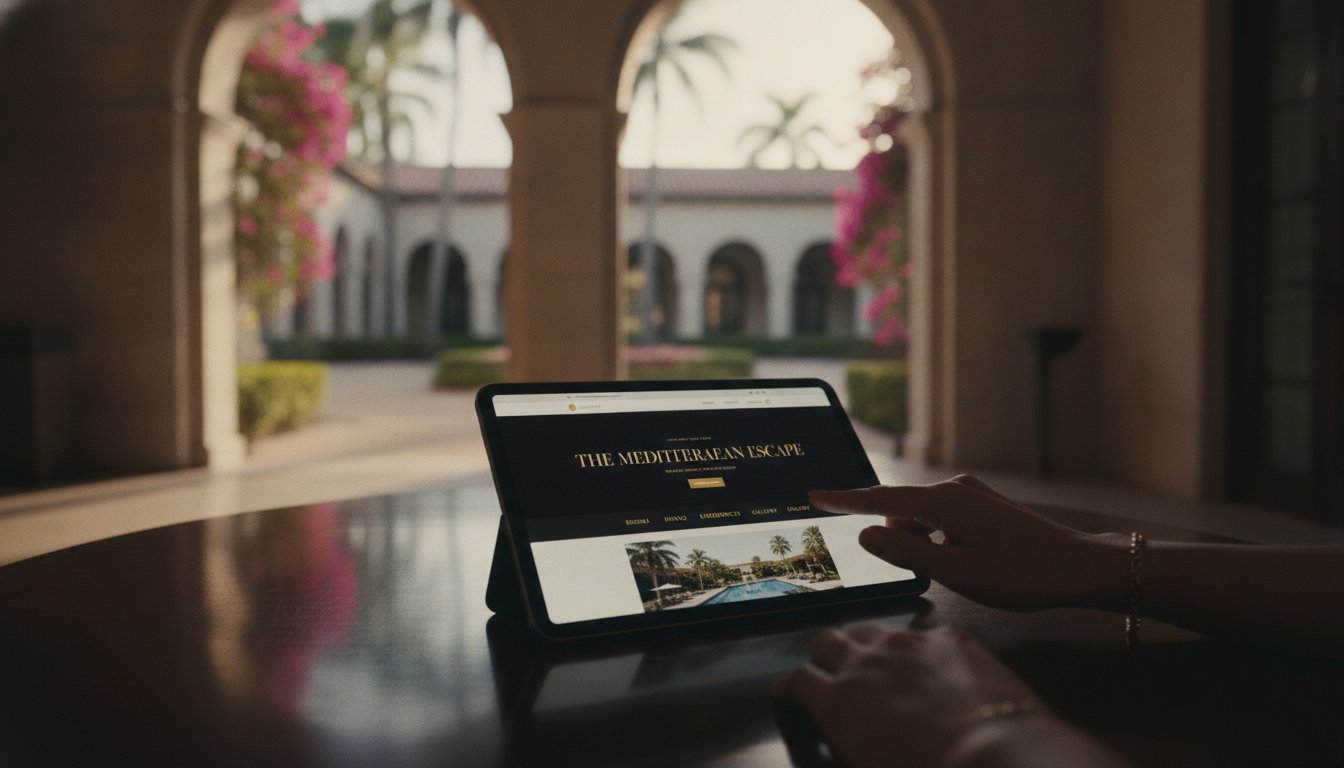
The "Ghost Town" website is equally damaging. Data shows that 77% of consumers visit a restaurant's website before dining. If your site looks like a relic from 2021, you are actively pushing away the 31% of guests who refuse to visit establishments with outdated digital footprints. A slow, clunky, or visually unappealing website suggests a lack of operational discipline. Guests assume that if you don't care about your digital image, you likely don't care about the details on the plate. Modern web design is no longer a luxury; it is the baseline for survival.
The 'Grid' as a First Impression
Your Instagram grid acts as your five-star lobby. It should be curated with the same precision as your interior design. While User Generated Content (UGC) provides social proof, relying on it too heavily is a strategic error. Amateur photos with poor lighting and cluttered backgrounds ruin an elite aesthetic. You must control the narrative. Ensure your social media presence is as smooth and intuitive as your table service. High-end guests expect a seamless transition from your digital feed to your physical host stand.
Content Retainers vs. One-Off Shoots
One-off shoots provide a temporary boost, but they leave your feed stagnant within weeks. Monthly content production ensures you stay top-of-mind without the frantic search for "what to post" next Tuesday. This approach allows for a sophisticated balance between promotional announcements and evocative storytelling. It keeps your brand narrative fresh, relevant, and aspirational. By investing in regular content production, you ensure your brand's visual language never falters. It allows you to lead the market rather than reacting to it. Stop the cycle of digital ghosting and secure your status as a destination.
Strategic Elevation: Turning Branding from an Expense into an Asset
Branding isn't a reward for reaching profitability. It's the vehicle that gets you there. One of the most common restaurant branding mistakes is viewing aesthetic investment as a secondary luxury. In reality, your brand identity is a high-performance engine. It dictates your market position and your ability to scale. While operational efficiency keeps the lights on, brand-led growth fills the seats. This shift in mindset transforms your creative spend from a line-item expense into a compounding asset.
Consider the "Premium Multiplier." A well-crafted brand narrative allows you to charge significantly more for the same raw ingredients used by your competitors. It moves the conversation away from price and toward prestige. When you stop thinking operationally and start thinking as a tastemaker, you create a buffer against rising labor and food costs. You aren't just selling a meal; you're selling a feeling of elite positioning. In a 2026 market where 68% of consumers report cutting back on dining, being the "premium choice" is the only way to protect your 10.5% profit margins.
The ROI of Visual Excellence
Professional visuals do more than look good. They lower your customer acquisition costs by increasing organic shareability and trust. Prestige also acts as a magnet for top-tier talent. Staff retention improves when employees feel they're part of a winning, high-status brand. Because 65% of a restaurant's revenue comes from repeat customers, maintaining a high-quality perception is vital for long-term stability. During market downturns, luxury branding serves as your best defense. Loyal guests will cut back on generic dining, but they remain committed to the experiences that define their lifestyle.
Choosing a Creative Partner
Busy owners don't have time to manage multiple creative workflows. A hospitality-specific agency understands the nuances of the industry in a way generalist marketing firms cannot. They know how to translate culinary artistry into a digital language that converts. Opting for a hands-off content retainer ensures your brand remains vibrant without adding to your operational burden. This partnership allows you to focus on the kitchen while experts handle your legacy. It's time to stop making common restaurant branding mistakes and start building a brand that commands the market. Elevate your brand with Opendoors Agency.
Securing Your Status in the 2026 Dining Landscape
The transition from a neighborhood choice to a luxury destination requires more than culinary excellence; it demands a disciplined visual narrative. You now understand that a brand is the emotional residue left with your guests long after the meal ends. Low-quality imagery and inconsistent digital presence are no longer just minor oversights. They are active barriers to your growth. Avoiding common restaurant branding mistakes requires a decisive shift from simple operational thinking to a brand-led strategy that justifies premium positioning.
Opendoors Agency specializes in Miami's luxury hospitality sector, providing full-service content production and brand strategy. We combine award-winning photography with sophisticated web design to ensure your brand feels like an elite destination. Our hands-off approach allows you to focus on the kitchen while we manage your visual legacy. It's time to lead the market with an identity that commands attention and secures loyalty.
Ready to elevate your restaurant's visual identity? Book a consultation with Opendoors Agency.
Your brand's evolution starts here. We're ready to guide the way.
Frequently Asked Questions
What is the most common restaurant branding mistake?
The most common restaurant branding mistake is treating a logo as the entirety of the brand identity. Many owners fail to realize that branding is a holistic experience encompassing every touchpoint from social media to table service. When you isolate the graphic from the atmosphere, you create a disconnect that confuses guests. True branding is the emotional residue left after the meal; it requires a disciplined, sensory-driven narrative to succeed.
How do I know if my restaurant needs a rebrand or just a refresh?
A rebrand is necessary when your core identity or target audience has fundamentally shifted. If your current image attracts "cheap" customers instead of high-spenders, a strategic overhaul is required. A refresh is better suited for established brands that simply need a visual update. It involves modernizing your web design or photography to stay relevant without abandoning the reputation you've built with loyal guests.
Can I fix my branding without changing my logo?
Yes, you can resolve many common restaurant branding mistakes by focusing on other visual assets. High-end photography and a modern web design can transform your perception without touching the icon. By refining your social media cadence and brand voice, you align your digital presence with your physical space. A logo is just a signature; the surrounding content production does the heavy lifting of storytelling and conversion.
Why is professional photography better than high-end smartphone photos?
Professional photography offers superior control over lighting, depth, and food styling that mobile devices cannot replicate. High-end smartphones often produce flat, distorted images that fail to capture the "WOW factor" premium guests expect. Professionals use specific lenses to evoke texture and vibrant colors, making the food look as indulgent as it tastes. In a luxury market, visual polish serves as a proxy for your kitchen's quality control.
How does branding affect my restaurant's profitability?
Branding acts as a premium multiplier that allows you to command higher prices for the same ingredients. It reduces customer acquisition costs by building a prestigious reputation that drives organic word-of-mouth. Strong branding also improves staff retention, as elite talent prefers working for aspirational brands. By shifting from an operational mindset to a brand-led strategy, you turn your visual identity into a high-conversion asset that protects your margins.
What should be included in a restaurant's brand guidelines?
Comprehensive guidelines must include your color palette, typography, and logo usage rules. Beyond these basics, you should define your brand voice, imagery style, and specific content production standards. This ensures that every social media post and menu layout feels cohesive. Effective guidelines act as a roadmap for your creative partners, ensuring your visual language remains consistent even as your team or locations expand.
How long does the restaurant branding process typically take?
The timeline for a professional branding project typically ranges from six to twelve weeks. This duration allows for deep strategic planning, creative development, and the production of high-quality assets like photography and web design. Rushing this process often leads to the very common restaurant branding mistakes that alienate premium guests. A methodical approach ensures that every detail is polished and aligned with your long-term growth objectives.
How do I maintain brand consistency across multiple locations?
Consistency across locations requires centralized brand management and a shared library of professional assets. You must ensure that every manager understands the brand voice and follows the established visual guidelines for social media and signage. Using a dedicated agency for ongoing content production prevents "brand drift" where individual sites start to lose their elite positioning. Uniformity across all touchpoints reinforces guest trust and secures your brand's status.