Why are your competitors landing multi-page spreads in national glossies while your exceptional menu remains a local secret? It isn't because their kitchen is superior. It's because they have mastered visual storytelling for restaurant branding. You likely feel the frustration of being invisible to high-tier editors despite your craft. You know your food is world-class, but it simply isn't translating into media interest. We understand that gap. It's a common hurdle for ambitious restaurateurs who possess the talent but lack the visual bridge to reach elite publications.
This article will change that. We'll show you how to transform your culinary concept into a compelling visual narrative that editors find impossible to ignore. You'll gain a clear framework for building a brand story that commands respect and increases your prestige. We provide the practical steps to pitch editors with confidence. From understanding the anti-perfect aesthetic trend of 2026 to creating sensory-driven imagery, you're about to learn how to turn your restaurant into a coveted media darling.
Key Takeaways
- Define the emotional thread connecting your concept and design to capture editorial interest by focusing on your brand's unique purpose.
- Identify the five narrative archetypes, such as the founder's journey, that elite publications find most compelling for their readers.
- Establish high-end photography as your PR foundation, recognizing that visual storytelling for restaurant branding is the non-negotiable prerequisite for premium coverage.
- Master a professional pitching framework to target the right editors and craft subject lines that command immediate attention.
- Scale your brand prestige through consistent content production that ensures your narrative remains relevant and visible to top-tier media.
Defining Restaurant Brand Storytelling for Elite Press Coverage
Brand storytelling is the invisible architecture of a successful restaurant. It acts as the emotional thread that binds your culinary concept, interior design, and menu into a singular, cohesive identity. For elite publications, this narrative is the entry fee. Editors at high-tier magazines receive hundreds of pitches daily; they don't look for a list of appetizers. They search for a "why" that resonates with their sophisticated readership. A compelling "why" transforms a local eatery into a national conversation.
This narrative serves as the essential foundation for visual storytelling for hospitality. Without a clear story, your photography is merely a collection of images. With a story, those images become a sophisticated visual storytelling experience that conveys atmosphere and intent. Mastering visual storytelling for restaurant branding ensures your brand isn't just seen; it's felt. It bridges the gap between a simple marketing message and a lasting cultural impact.
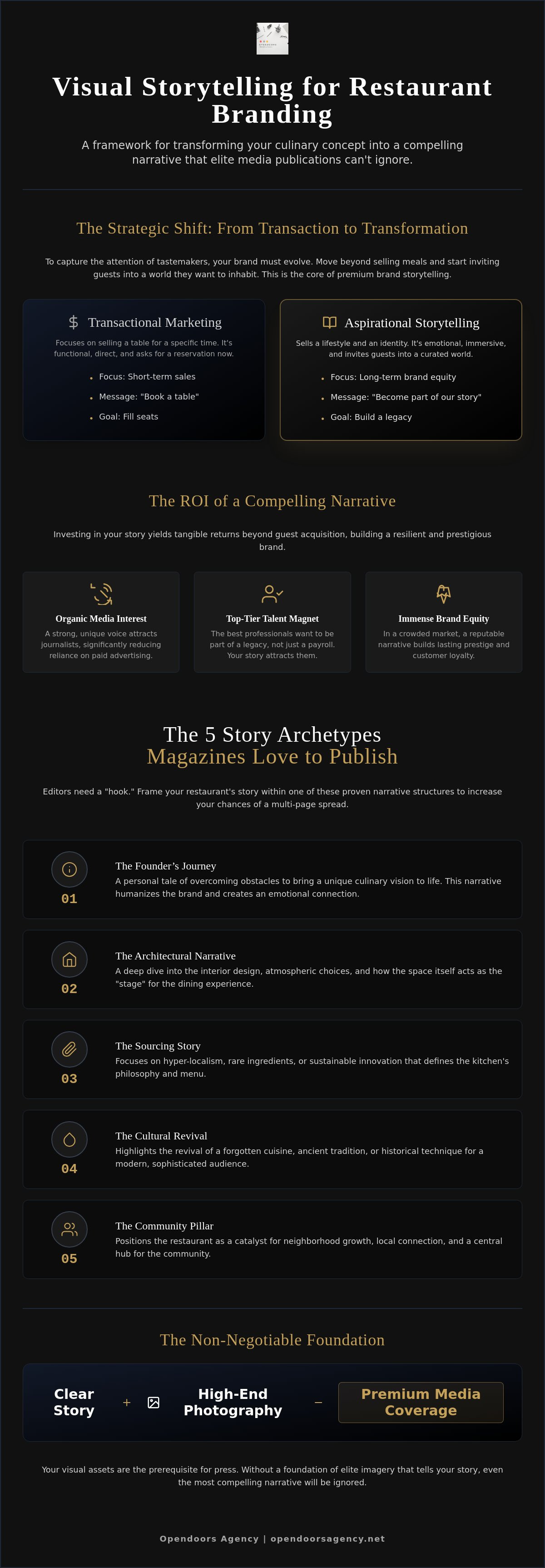
Distinguish your strategy by separating marketing from storytelling. Marketing is transactional; it focuses on selling a table or a specific time slot. Storytelling is aspirational; it sells a lifestyle and an identity. While marketing asks for a reservation, storytelling invites the guest into a curated world they want to inhabit. This shift in perspective is what captures the attention of tastemakers and editors alike.
The ROI of a Compelling Narrative
Invest in your story to reduce long-term costs. A strong narrative generates organic editorial interest, which significantly lowers your reliance on expensive paid advertising. When your brand possesses a unique voice, the media comes to you. This builds immense brand equity and prestige in a crowded, competitive market. Beyond guest acquisition, a reputable brand story serves as a magnet for top-tier culinary and management talent. Professionals want to work for a brand that stands for something more than just a menu; they want to be part of a legacy.
Moving from Transactional to Transformational
Elevate the guest perception from "eating a meal" to "experiencing a curated world." This transformation requires finding the human element in your daily operations to create genuine relatability. Authenticity is the primary currency for modern hospitality PR. It involves highlighting the craftsmanship of your chefs, the history of your location, or the specific inspiration behind your decor. When you lead with truth rather than sales tactics, you build a foundation of trust. This transparency makes your brand more approachable and significantly more newsworthy in the eyes of the elite press.
The 5 Story Archetypes Magazines Love to Publish
Magazines do not print menus; they print narratives. To capture the attention of a high-tier editor, you must categorize your restaurant’s existence into a recognizable story archetype. These structures provide the "hook" that journalists need to justify a feature. When you align your concept with these proven frames, you simplify the editor's job and increase your chances of a multi-page spread. Effective visual storytelling for restaurant branding requires choosing a primary narrative and sticking to it with unwavering consistency.
- The Founder’s Journey: A personal tale of overcoming obstacles to bring a unique vision to life.
- The Architectural Narrative: A deep dive into interior design, atmospheric choices, and the "stage" of the dining experience.
- The Sourcing Story: A focus on hyper-localism, rare ingredients, or sustainable innovation that defines the kitchen.
- The Cultural Revival: Bringing a forgotten cuisine or ancient tradition to a modern, sophisticated audience.
- The Community Pillar: Positioning the restaurant as a catalyst for neighborhood growth and local connection.
Research confirms that these narratives are most effective when supported by elite imagery. In fact, a study on The Power of Visuals in Food Marketing highlights how graphic storytelling directly impacts customer perception and brand prestige. If you want to elevate your status, you must lead with a story that feels both exclusive and relatable.
Crafting the Founder’s Journey
Your origin story is your brand's soul. To make it newsworthy, identify the specific inciting incident that led to the restaurant’s creation. Editors don't care about your business success metrics or EBITDA; they care about vulnerability and passion. Describe the moment you realized this concept had to exist. Focus on the risks taken and the vision maintained against the odds. For a deeper look at narrative alignment, consult the ultimate restaurant branding guide to ensure your personal story matches your visual output.
The Design-Led Feature
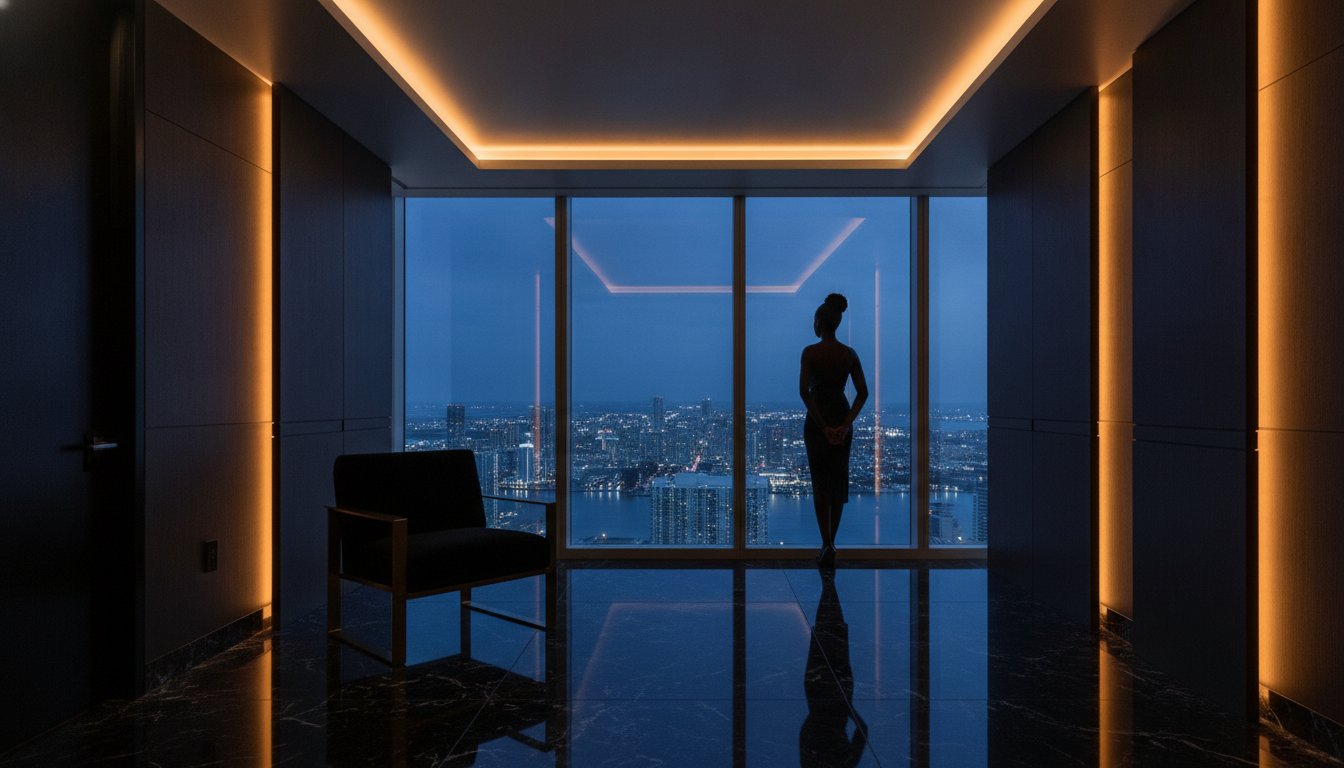
For lifestyle and design titles, interior photography is often more important than the food itself. These publications sell an aesthetic. Highlight the specific materials, custom lighting, and "Instagrammable" moments that editors crave for their visual layouts. Position your space as a genuine architectural contribution to the city's landscape. When your design tells a story of luxury and intentionality, you become a "tastemaker" destination. If you are ready to document your space with this level of precision, consider partnering with a specialist creative agency to capture the details editors can't ignore. This approach ensures your visual storytelling for restaurant branding feels as premium as the experience you provide.
Visual Prestige: High-End Photography as the PR Foundation
Magazines function as visual galleries. For a high-tier editor, the images are the story; the text is merely a secondary accompaniment. If your visual assets don't meet the aesthetic standards of a national glossy, your pitch will face automatic rejection. Elite publications operate on visual prestige. They require imagery that feels expensive, intentional, and perfectly curated. This is where visual storytelling for restaurant branding moves from theory into tangible assets. You cannot expect a journalist to champion your brand if you haven't provided the visual proof of your excellence.
Amateur content is the quickest way to signal a lack of professionalism. "iPhone-quality" photos, regardless of the device's advancements, lack the depth, lighting control, and narrative soul required for print. Investing in professional restaurant photography miami establishes immediate credibility with the press. It tells an editor that you understand their world. To streamline the process, you must create a "Visual Press Kit." This is a curated digital folder that allows editors to drag-and-drop your brand directly into a layout. It removes the friction from their workflow and positions your restaurant as a seamless choice for their next feature.
The Anatomy of a Press-Ready Photo Shoot
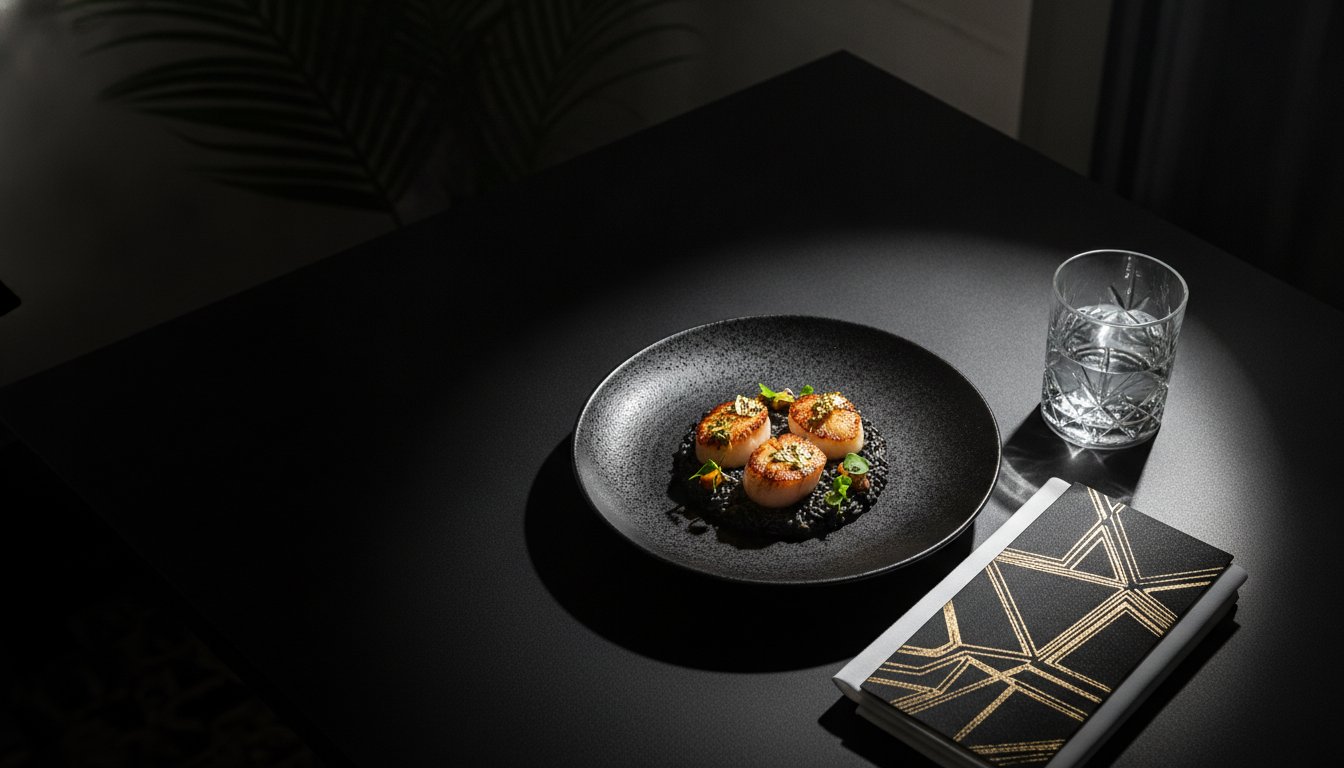
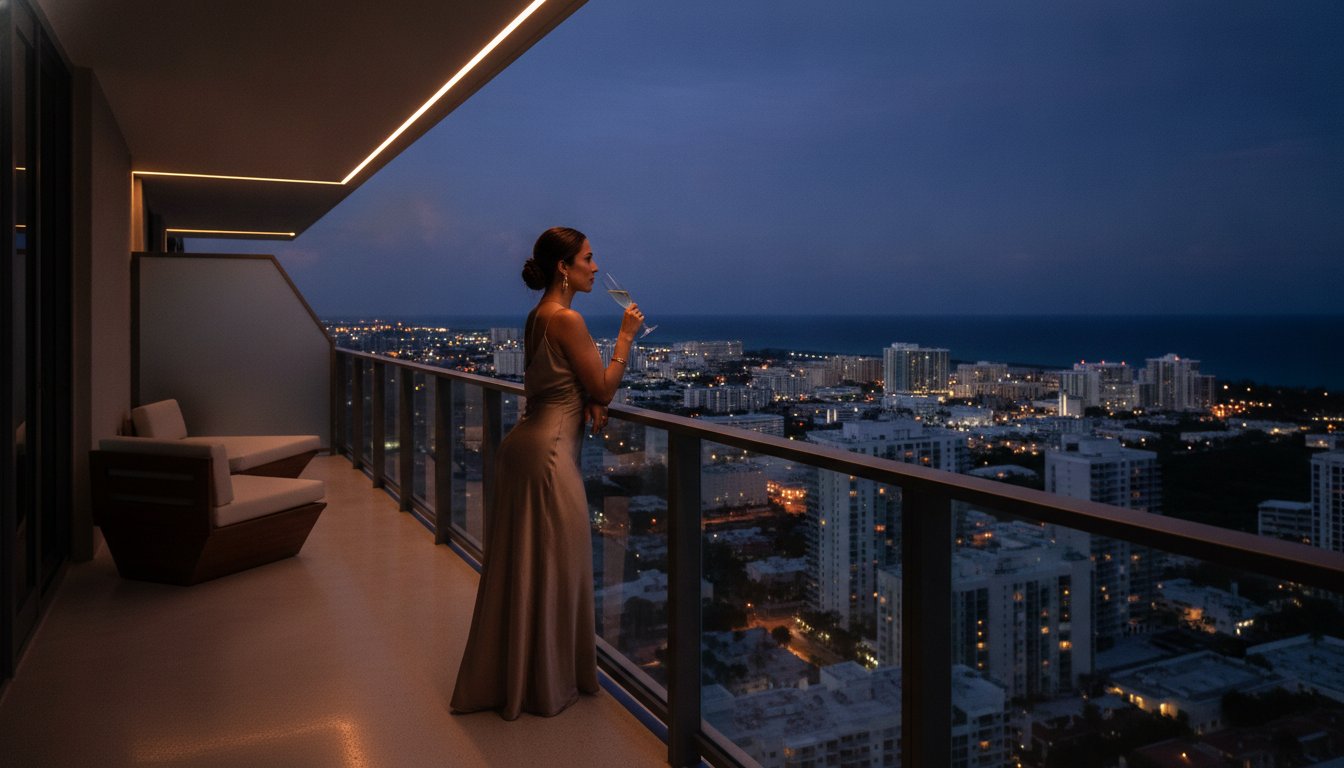
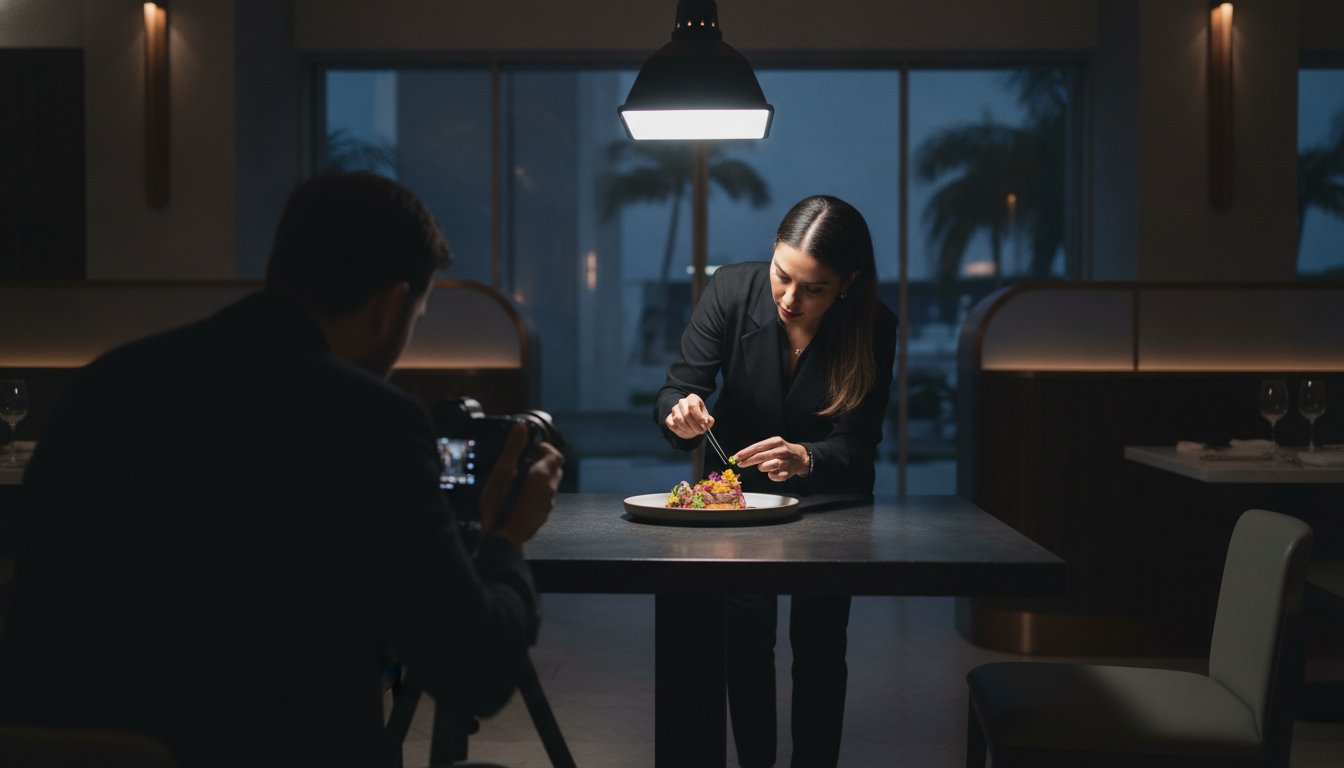
A successful editorial shoot requires a strategic mix of perspectives. You need wide-angle interior shots that capture the architectural narrative and atmospheric lighting. Pair these with lifestyle action shots that include human presence to convey a sense of "vibe" and energy. Detailed food macros are essential, but professional food styling is non-negotiable. Stylists ensure every plate looks effortless yet immaculate under studio lights. This variety allows an editor to build a comprehensive story without needing additional resources. It shows you have considered every touchpoint of your visual identity.
Leveraging Visual Storytelling for Prestige
High-end imagery does more than show your food; it signals your price point and target demographic. It creates a sense of effortless luxury that resonates with a sophisticated reader. When your photography is consistent across your website and social media for upscale restaurants, it reinforces your brand's authority. This visual cohesion proves to editors that your restaurant is a stable, high-value subject. You aren't just selling a meal. You are presenting a lifestyle that their audience aspires to join. High-quality visuals are the currency of this exchange.
How to Pitch Your Restaurant Story to Editors in 2026
Pitching your brand is a high-stakes exercise in precision. It requires more than a simple email; it demands a strategic alignment between your narrative and an editor's specific needs. To succeed in 2026, you must treat the media as a partner rather than a target. Effective visual storytelling for restaurant branding provides the substance, but your pitch provides the access. Follow this methodical framework to secure the coverage your concept deserves.
- Step 1: Identify the Right Publication. Don't guess. Research whether your story fits better in Food, Lifestyle, or Design sections. Target the specific editor who covers your niche.
- Step 2: Craft a Punchy Subject Line. Use a declarative, attention-grabbing statement. Highlight your unique hook immediately to stand out in a crowded inbox.
- Step 3: The 3-Paragraph Pitch. Keep it brief. Paragraph one is the Hook. Paragraph two is the Story (your chosen archetype). Paragraph three lists the Assets.
- Step 4: Provide High-Res Access. Include a direct link to a Dropbox or Google Drive folder. Never attach large files that clog an editor's server.
- Step 5: The Art of the Follow-Up. Check in once after seven to ten days. Be professional and concise. Maintain your poise if you don't receive an immediate response.
The 3-paragraph pitch is a masterclass in brevity. Your first paragraph must present a contrarian or attention-grabbing claim about your concept. The second paragraph connects your brand to the human elements or architectural narratives we discussed earlier. Finally, the Assets paragraph informs the editor that you have professional, editorial-grade photography ready for immediate use. This structure respects the editor's time while proving your brand's readiness for a feature. If you want to ensure your pitches are backed by world-class assets, partner with us for elite content production.
Researching Editorial Calendars
Time is either your greatest asset or your biggest enemy. If you pitch a holiday feature in November, you are already three months too late. Print magazines plan their seasonal themes far in advance. Study editorial calendars to align your brand news with upcoming magazine themes. Use LinkedIn to identify the correct gatekeepers and review their recent work. This ensures your visual storytelling for restaurant branding reaches the person most likely to champion it.
Building Relationships with Freelance Writers
Target contributors who write for multiple titles rather than just one staff editor. These freelance writers are often looking for fresh, high-quality subjects to pitch to their various outlets. Engage with their work on social media before you ever send a formal pitch. Provide "low-hanging fruit" like inclusions for "Best Of" lists to start the relationship. This builds trust and establishes your brand as a reliable, high-prestige resource for their future stories.
Scaling Your Narrative with a Hospitality Creative Partner
Securing a single magazine feature is a significant milestone. Maintaining that level of media relevance is a long-term strategy. Editors always look for the next evolution of a concept. If your visual assets remain static, your brand quickly loses its newsworthy edge. Ongoing content production is essential to keep your narrative fresh and compelling. It ensures that when a journalist looks for a story, your brand is the most vibrant and prepared option available.
Partnering with a miami creative agency for hospitality provides the professional infrastructure to scale your prestige. At Opendoors Agency, we handle the visual and strategic heavy lifting for luxury brands. This includes everything from initial brand strategy and high-end photography to the ongoing production of content that populates your social channels and press kits. We move your restaurant beyond one-off features. Our goal is to establish you as a recognized industry tastemaker. This transition requires a sophisticated approach to visual storytelling for restaurant branding that evolves alongside your menu and space. We ensure your brand remains at the forefront of the hospitality conversation.
The Content Retainer Advantage
A content retainer ensures your brand assets are always current and magazine-ready. We provide a constant stream of high-end photography and video that meets the highest editorial standards. This creates a powerful synergy between your daily social media presence and your long-term PR goals. When your digital channels reflect the same quality as a print spread, editors take notice. This hands-off convenience frees you to focus on operations. We manage the image; you manage the experience.
Building a Long-Term Visual Legacy
Consistency in branding has a cumulative effect on business valuation. A well-documented visual history signals stability and high-market demand to investors and guests alike. You are no longer just a dining destination; you are a landmark. Landmark restaurants aren't born; they are curated through consistent visual excellence. This legacy is built through years of intentional, high-prestige imagery that defines your place in the city's culture. It’s about creating a world that people want to revisit, both in person and in print. This strategic consistency increases your brand's authority and long-term prestige. To begin this transformation, Partner with Opendoors Agency to craft your brand’s visual narrative.
Command the Spotlight with Visual Authority
Securing a magazine feature isn't a matter of luck; it's a result of strategic positioning. You now understand that editors prioritize the "why" behind your concept. By selecting a proven narrative archetype and investing in elite photography, you bridge the gap between a local favorite and a national landmark. Mastering visual storytelling for restaurant branding ensures your brand possesses the prestige necessary to capture the industry’s attention. It transforms your vision into a cultural asset that journalists are eager to share.
Opendoors Agency stands as Miami’s premier hospitality creative firm. We are specialists in high-end visual storytelling, offering comprehensive branding and content production packages designed for the luxury sector. We handle the creative heavy lifting so you can focus on the guest experience. Our team ensures your assets are always magazine-ready and your narrative remains relevant. Elevate your brand with Opendoors Agency’s creative services.
Your restaurant has a story that deserves to be told. With the right visual foundation and a disciplined approach to pitching, you'll see your brand featured in the world's most influential publications. We look forward to seeing your concept on the front page.
Frequently Asked Questions
How do I find the email address of a magazine editor?
Start with the publication's masthead. Most magazines list their staff in the front pages of print editions or on their digital "About" pages. Check LinkedIn for the specific editor handling your niche, such as the Food Editor or Design Editor. Professional tools like RocketReach or Hunter.io can provide direct contact details. Always verify the address before sending your pitch to ensure your visual storytelling for restaurant branding assets reach the right person.
Do I really need professional photography to get featured in a magazine?
Yes, professional photography is an absolute prerequisite for editorial consideration. Magazines are visual mediums that rely on high-resolution, perfectly lit imagery to maintain their prestige. Editors will reject even the most innovative concepts if the supporting photos don't meet their aesthetic standards. You must provide assets that look like they already belong on their pages. High-quality visuals prove you're a serious, high-end contender in the hospitality space.
How long does it usually take to get a response from a pitch?
Expect a response within seven to fourteen days. Editorial teams manage high volumes of inquiries and often wait for internal meetings to discuss potential features. If you haven't heard back after ten days, send a polite, concise follow-up. Patience is a virtue in high-tier PR. If your story doesn't fit their current cycle, they may keep your assets on file for a future seasonal theme.
What is the difference between a press release and a brand story?
A press release is a transactional announcement of news, such as a grand opening or a new chef. A brand story is a lasting narrative that explains your restaurant's soul and purpose. While a press release might get a brief mention, a brand story earns a multi-page feature. Effective visual storytelling for restaurant branding bridges these two, turning your news into an aspirational lifestyle piece that resonates with a sophisticated audience.
Can I get national press coverage even if I only have one location?
Yes, a single location can achieve national recognition if the concept is sufficiently unique and visually compelling. Magazines look for tastemaker destinations that define a city's culture. Your physical footprint matters less than your narrative impact. If your design and menu offer something truly original, national editors will view you as a worthy subject for their global readership. Focus on being the best in your specific category.
Should I pay for sponsored content if I cannot get organic coverage?
Sponsored content should be a secondary strategy used to supplement organic interest. While it guarantees placement, it often lacks the prestige associated with an earned editorial feature. If you struggle with organic reach, review your visual assets first. Often, the issue isn't the story, but the quality of the photography. Invest in your image before spending on paid placements to ensure a higher return on investment.
How often should I be pitching new stories to the media?
Pitch a new, substantial story every three to four months. You don't want to over-saturate an editor's inbox with minor updates. Focus on major evolutions like a complete seasonal redesign, a significant sourcing breakthrough, or a unique cultural collaboration. This rhythm keeps your brand top-of-mind without becoming a nuisance. It ensures that every time you reach out, you're offering something of genuine value and high aesthetic interest.