The most expensive ingredient in a Michelin-starred kitchen isn't the rare forage or the precision ferment; it's the digital narrative that keeps the tables full. In 2026, michelin star restaurant marketing has evolved beyond the plate to focus on cultural clarity and the chef's unique authorship. You understand that maintaining elite standards is a relentless pursuit. The pressure to attract high-net-worth clientele consistently is intense, especially when you're struggling to translate a multi-sensory physical experience into a digital format that feels just as exclusive.
This article provides the blueprint to master the sophisticated strategies required to earn, sustain, and capitalize on the world's most prestigious culinary accolade. We'll show you how to align your brand image with the quality of your menu to ensure your digital presence is as polished as your service. You'll learn to navigate the 2026 landscape, from the launch of Michelin's Mindful Voices platform to the power of elite content production. We're moving from simple promotion to the meticulous management of prestige.
Key Takeaways
- Shift from standard promotional tactics to elite signaling to ensure your brand image matches the precision of your menu.
- Audit your visual assets to eliminate low-prestige gaps and prioritize high-end photography that captures both culinary artistry and architectural luxury.
- Implement a sophisticated michelin star restaurant marketing framework to define your chef’s unique narrative and maintain global visibility.
- Transform your website into a digital front door that balances mystery with accessibility to secure sustainable booking lead times.
- Leverage curated content production and strategic branding to translate an elite physical experience into a compelling digital format.
What is Michelin Star Restaurant Marketing in 2026?
Elite dining demands a different vocabulary. Michelin star restaurant marketing isn't about filling seats; it's about curating a legacy. While standard restaurants fight for clicks with discounts, a Michelin-starred establishment signals quality through restraint. Every touchpoint, from the texture of the menu to the lighting in your photography, must whisper excellence. You're not just selling a dinner. You're selling an echelon of existence.
Standard tactics fail in this space because they erode prestige. Aggressive calls-to-action and "limited time offers" suggest a desperation that is antithetical to the Michelin Guide standards. In the elite tier, marketing is the art of signaling. You don't ask for a booking. You present an opportunity. This shift in perspective is what separates a local favorite from a global destination.
The "Michelin Effect" remains a potent force in 2026. A single star can instantly elevate your brand's global value, but it also shifts the burden of expectation. Guests aren't just looking for a meal; they're looking for a performance. By 2026, the strategy has moved from gatekept mystery toward digital transparency. Michelin's new "Mindful Voices" platform, launching June 1, 2026, proves that the industry now values the individuals rewriting the rules as much as the food itself. Your digital presence must reflect this authorship.
The Psychology of the Michelin Guest
Guests at this level are driven by a hedonic need for prestige. They seek memorable experiences that serve as social currency. They use the star as a proxy for trust and consistency in an unpredictable market. Exclusivity isn't a barrier; it's a driver of long-term demand. When access is controlled through sophisticated web design and limited availability, the desire to enter increases. You're managing a narrative of scarcity.
The Five Michelin Criteria as Marketing Pillars
Your marketing should reflect the inspectors' own standards to maintain alignment with the brand. Focus on these three pillars:
- Quality of Ingredients: Use high-end photography to tell the story of the source and the season.
- Mastery of Technique: Deploy expert content production to showcase the "how" behind the dish without giving away the magic.
- Personality of the Chef: Build your branding around a clear culinary vision that feels personal and distinct.
In 2026, inspectors prioritize "cultural clarity" and "authorship" over purely technical skill. Your marketing must reflect this by focusing on your unique story. It's about why you cook, not just what you cook.
The Visual Language of Fine Dining: Photography and Brand Identity
Visuals are the first course served to your guest. In the world of michelin star restaurant marketing, average imagery is a silent killer of aspirations. If a dish looks pedestrian on a screen, the guest assumes the experience is pedestrian in person. You must bridge the gap between the physical plate and the digital screen through meticulous visual storytelling. This isn't just about food; it's about the soul of the establishment. It's about signaling that your standards are uncompromising.
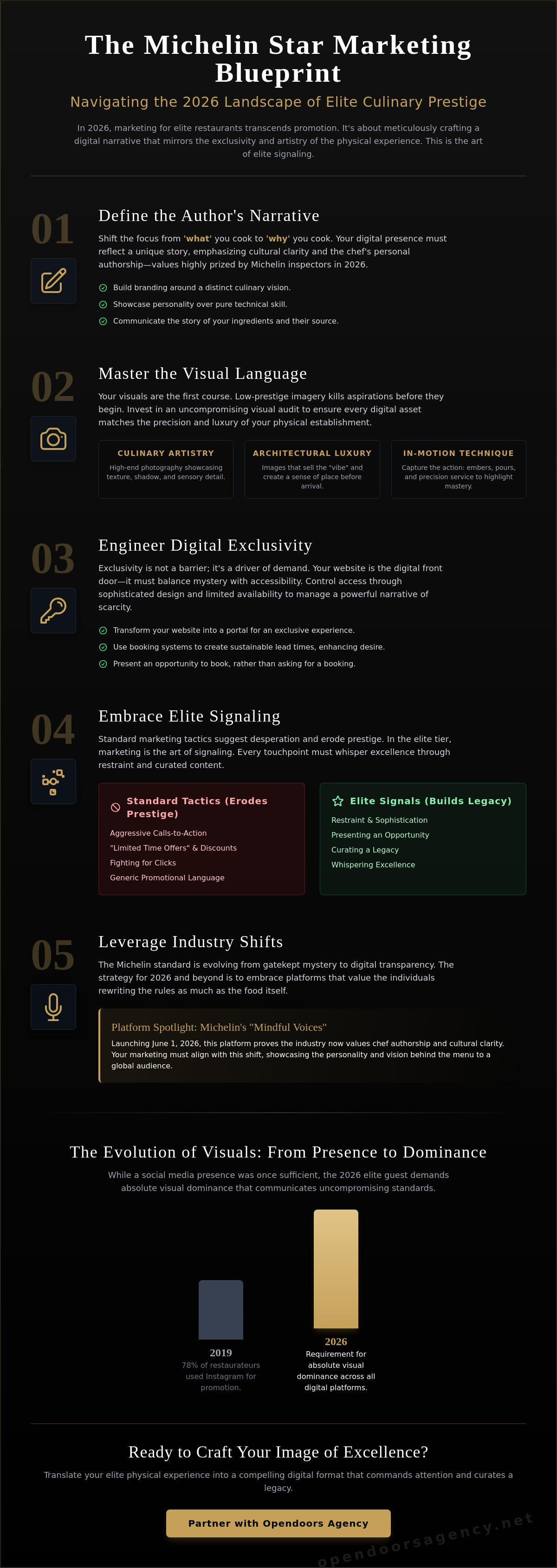
Architectural photography plays a critical role in selling the "vibe" and interior luxury. Guests want to see the environment where their memories will be made. High-end imagery of your dining room signals the level of service they can expect. It creates a sense of place before they ever step through your doors. This consistency must extend from your physical menus to your social media presence and web design. In 2019, 78% of restaurateurs already used Instagram to promote their businesses; by 2026, the requirement has shifted from mere presence to absolute visual dominance.
Elevating the Plate Through Professional Imagery
Lighting and composition are your primary tools. You're creating art, not just taking food photos. Focus on the interplay of shadow and texture to evoke a sensory response. Capturing "action" is equally vital. In 2026, inspectors and guests alike are drawn to the chef's technique in motion. Show the embers of a binchotan charcoal grill or the precision of a tableside pour to highlight the 2026 trend of a return to classic service. restaurant photography miami must prioritize these high-end hospitality standards to resonate with an elite audience.
Visual Identity Beyond the Logo
A sophisticated restaurant brand identity relies on more than just a logo. Typography and color palettes must evoke a sense of effortless luxury. Your digital visuals should mimic the tactile quality of a heavy, linen-paper menu. Consistency is the hallmark of prestige. Consider how Miami's top-tier establishments use dramatic lighting and "cooking with fire" motifs to define their brand across all platforms. They don't just show the food; they show the atmosphere. To ensure your brand matches the quality of your plate, you need to invest in expert content production that captures your unique culinary vision.
Digital Presence vs. Physical Experience: Managing the Narrative
Your website is your first Michelin inspector. In 2026, the guest journey begins long before the first course is served. It starts with a search. If your digital presence feels cluttered or slow, you've already lost the aura of excellence. Michelin star restaurant marketing relies on a "digital front door" that is as welcoming and precise as a world-class maître d'. It must set the tone for the physical experience to follow.
Balancing mystery with accessibility is a delicate art. You want to evoke curiosity without creating frustration. Showing every dish on your website can strip away the wonder of discovery. Instead, focus on the atmosphere. 35% of guests state that online reviews affect their choice of where to dine, but for elite establishments, the goal is to lead that conversation. Marketing doesn't ruin the authentic dining experience; it frames it. It provides the context that allows the guest to appreciate the nuance of your work.
Third-party platforms like Resy or OpenTable are tools, not your brand's home. While they provide essential functionality, they shouldn't own your narrative. Use them for convenience, but ensure your primary storytelling happens on your own channels. This control allows you to maintain the "Michelin bump" by directing the guest's attention exactly where you want it. You're managing a transition from a digital viewer to a physical diner.
Website UX for the Elite Diner
Speed is a non-negotiable standard for luxury brands. A slow site suggests a lack of attention to detail. Your web design must prioritize mobile-first functionality with seamless booking systems that don't break the aesthetic. A hotel digital marketing agency florida understands the complex interplay between high-end hospitality and digital conversion, making them an ideal partner for restaurants that share a luxury footprint. They ensure the transition from browsing to booking is effortless.
Social Media as a Curated Gallery
Fine dining on social media requires a "Silent Luxury" approach. Quality always beats frequency. Your Instagram feed should feel like a curated gallery rather than a broadcast channel. Use short-form video to showcase the choreography of elite service. Reels that highlight the precision of a tableside preparation or the quiet focus of the kitchen provide the behind-the-scenes content 2026 diners crave. This is how michelin star restaurant marketing translates physical mastery into digital influence. You aren't just posting; you're performing.
Implementing a 5-Step Michelin Marketing Framework
Prestige is fragile. While the guide awards the star, your strategy sustains the momentum. Effective michelin star restaurant marketing requires a methodical approach to brand management that mirrors the precision of your kitchen. By 2026, the average marketing budget for a one-star restaurant is a fixed expense of $2,500 per month. This investment must be used with surgical precision to ensure every dollar reinforces your elite positioning. Follow this five-step framework to align your operations with global expectations.
- Step 1: Audit Visual Assets. Identify "low-prestige" gaps in your current imagery. If your social media looks like a neighborhood bistro while your menu is fine dining, you're losing potential guests.
- Step 2: Define the Chef's Narrative. In 2026, Michelin inspectors prioritize "authorship." Your brand must articulate the unique story behind the menu, focusing on specific techniques like fermentation or cooking with fire.
- Step 3: Deploy a High-End Content Retainer. Consistency is the hallmark of luxury. Use professional content production to ensure your visual excellence never fluctuates.
- Step 4: Optimize the Digital Booking Journey. Friction kills conversion. Your web design must allow for a seamless, aesthetic booking experience that feels as curated as your table service.
- Step 5: Leverage Local Authority. Hyper-local SEO is a dominant trend in 2026. Ensure your restaurant is the definitive search result for your specific neighborhood, not just your city.
To implement this framework with the required level of sophistication, you need a partner who understands the visual language of success. Elevate your brand identity with a strategy designed for the elite dining sector.
Defining the Culinary Narrative
Your technique is your signature. Identify the specific "uniqueness" of your sourcing or preparation methods to build chef authority. Use behind-the-scenes content to showcase the intense focus required to maintain Michelin standards. This transparency builds trust and justifies your price point. Train your staff to communicate this brand story consistently; every server is a brand ambassador for your culinary vision.
Sustaining Momentum Post-Star
Receiving a star creates the "Michelin bump," but you must manage the influx of "Star-Chasers" without alienating loyal local patrons. Use email marketing to offer early access to new menus, maintaining a sense of exclusivity for your regulars. In a market where 35% of guests are influenced by online reviews, manage your reputation with calm, authoritative confidence. Never appear defensive; let the quality of your plate and your branding speak for themselves.
The Opendoors Approach: Crafting the Image of Excellence
Generic agencies see a restaurant; we see a legacy. In the specialized world of michelin star restaurant marketing, a one-size-fits-all approach is a liability. Boutique agencies outperform generic firms because we understand the sensory and aesthetic language of luxury. We don't just produce content. We curate prestige. Our methodology merges high-end photography with strategic branding to ensure your digital presence is as refined as your tasting menu. We bridge the gap between the kitchen's heat and the screen's glow.
Transforming a Miami establishment into a global culinary destination requires more than a logo. It requires a cohesive visual narrative that speaks to international travelers and Michelin inspectors alike. We manage the operational burden of content production so your team can focus on service. You run the kitchen; we capture the excellence. This seamless partnership turns a physical space into a digital masterpiece. We understand that your time is best spent on the pass, not behind a camera.
Our work is rooted in results. By aligning your brand identity with the high standards of the 2026 Michelin criteria, we help you secure the global visibility your talent deserves. We don't just follow trends; we set the visual benchmarks for elite dining. This proactive strategy ensures that your restaurant doesn't just earn a star but sustains it through consistent, high-prestige signaling across every platform.
Our Content Retainers for Fine Dining
Consistency is the heartbeat of elite branding. Our monthly high-end visual production is tailored specifically for the demands of Instagram and TikTok. We employ a "hands-off" approach that allows us to capture the story of your menu while you manage your operations. Every frame we produce is designed to align with Michelin-level expectations. We focus on the textures, the light, and the choreography of your service to create a gallery that feels as exclusive as your dining room.
Partnering for Long-Term Growth
We look beyond the immediate shoot to focus on strategic brand evolution for 2026 and beyond. This involves custom web design and web development that converts high-intent diners into confirmed bookings. As the fine dining market grows toward a projected $243.17 billion by 2030, your digital infrastructure must be ready to scale. We provide the technical and creative foundation for your continued success. Elevate your restaurant's visual narrative with Opendoors Agency and define your place in the global culinary landscape.
Defining Your Culinary Legacy
The journey to a star begins with a single dish, but the path to a global legacy is paved with visual excellence. You've seen how 2026 demands more than just technical skill. It requires a deep commitment to cultural clarity and authentic storytelling. Mastering michelin star restaurant marketing is about ensuring your digital presence is as meticulous as your mise en place. By prioritizing high-end photography and seamless web design, you bridge the gap between curiosity and a confirmed booking.
Our team specializes in Miami hospitality branding. We offer high-end content retainers that capture the soul of your kitchen without disrupting your service. We understand the unique pressures of the elite dining sector and provide the luxury visual storytelling needed to transform your restaurant into a global destination. We turn your culinary vision into a compelling digital narrative.
Elevate your restaurant's digital presence with the masters of hospitality aesthetics.
The stars are within reach when your brand reflects your brilliance.
Frequently Asked Questions
How much does a Michelin star increase a restaurant's revenue?
Receiving a star typically triggers the "Michelin bump," a significant increase in business and global visibility. While exact revenue growth varies by market, the accolade allows restaurants to sustain higher price points and justifies the $848,000 startup capital often required for elite venues. It transforms a local establishment into a destination with predictable, long-term booking lead times.
Does a restaurant need a PR agency to get a Michelin star?
No, Michelin inspectors operate anonymously and evaluate restaurants based solely on the quality of the plate. While visibility helps, the guide focuses on technical skill and the chef's unique authorship. You should focus on your branding and digital narrative to ensure your culinary vision is clear before an inspector even books a table.
What are the most effective marketing channels for fine dining restaurants?
Successful michelin star restaurant marketing prioritizes "owned channels" like your website and private email lists over broad advertising. Instagram remains the dominant visual platform for the industry. High-end content production for social media ensures your digital identity matches the precision of your kitchen, creating a cohesive experience for high-net-worth guests.
How do Michelin inspectors view a restaurant's social media presence?
Inspectors prioritize the physical dining experience, but they increasingly value "cultural clarity" and a chef's unique vision in 2026. A curated social media presence helps define this narrative. With the launch of the "Mindful Voices" platform on June 1, 2026, Michelin is explicitly highlighting individuals who rewrite the rules of gastronomy through their digital storytelling.
Can a restaurant market itself as 'Michelin-style' without a star?
You can signal elite quality through sophisticated aesthetics and high-end photography without using trademarked terms. Focus on architectural imagery and professional plate shots to evoke a sense of prestige. This level of visual authority builds the reputation necessary to eventually earn official recognition from the guide or attract a similar clientele.
How often should a fine dining restaurant update its professional photography?
Update your visual assets at least quarterly to reflect seasonal menu changes and evolving techniques. Fine dining relies on the precision of the current moment. Regular content production ensures your digital front door always matches the exact experience guests will find at their table, maintaining your brand's vibrancy and relevance.
What is the difference between marketing a casual restaurant and a Michelin-starred one?
Casual marketing focuses on volume and convenience, while michelin star restaurant marketing focuses on scarcity and prestige. You don't use aggressive calls-to-action or discounts. Instead, you employ refined branding and expert web design to create an atmosphere of effortless luxury that justifies an elite price point and builds long-term desire.
How do I handle negative reviews for a Michelin-starred restaurant?
Respond with calm, authoritative confidence and avoid becoming defensive. 35% of guests are influenced by online reviews, so your response must mirror your high tableside service standards. Address the feedback professionally and keep the focus on your commitment to excellence. This approach protects your brand image while demonstrating accountability to your discerning audience.